
Rejoice in the Lord - Praise God in Adversity
As we conclude this rich prophetic book, we are going to witness another significant step as the prophet continues to move from fear to faith. In chapter 3 we find Habakkuk’s response rise in a zenith of praise to God and find faith now more firmly imprinted on the humbled and strengthened heart of this man.
What prompts the response we will find in chap 3? Let’s make a brief review. The first two chapters are difficult. Habakkuk is struggling as he looks outward, seeing an overwhelming flood of wickedness and injustice while wondering where God is and why he seems inactive. God responds with grace, even to the point of revealing some details of his plan for the future. Although perplexing, Habakkuk begins to bend his emotions and will to God’s sovereign power and plan. This culminates with a call in 2:20 (READ). The audience is called to consider the immensity of God in his holy temple and what that awesome thought evokes…. Silence. The prophets Zephaniah (1:7) and Zechariah (2:13) issued the same call…. Look! See who and where God is and be hushed before YHWH!
Can we identify with this call? There are certainly experiences in life to which we can relate that invoke a similar response; standing on the rim of the Grand Canyon or other lofty height at sunset where vastness and beauty make speech feel small, or the climatic, final note of an incredible, orchestral performance that leaves the audience in silenced awe. Can you think of the last time when thoughts of God in his holy temple reduced you to silence? Should that be a frequent occurrence in the life of a believer? As a result, what should my response be?
We are going to observe Habakkuk’s response today. It is instructive as a personal testimony of what God did in his heart and a wise pattern for us to follow in our lives. Sometimes we may wonder or even be skeptical of the value in the writings of these OT prophets. After all, we are in the church age. The church isn’t Israel or vice versa. Weren’t all of these writings for different people and time? The answer is no. “All Scripture is…profitable for doctrine, reproof, correction and instruction in righteousness.” Do we really believe that? The apostle Paul did and reminded the believers in Rome of the value which God places on the message of the prophets (Rom 15:4) – “For whatever things were written before were written for our learning, that we through the patience/endurance and the comfort/encouragement of the Scriptures might have hope.”
So, for our endurance and encouragement this morning, we are going to examine this valuable text by contemplating ways in which the faith of the righteous grows out of silence and contemplation of God.
Faith responds in worship of God. (Hab 3:1-2)
Objectifying, personifying “faith”.
We could ground this response back in 2:4 (“The righteous shall live by faith”) by saying it this way, the righteous person’s faith grows through trials as his focus on God results in awe and submissive worship.
Habakkuk’s approach to God in chapter 3 sounds different than his questioning of God in Chs. 1-2. Although not identified as such, could we consider those earlier exchanges with God as prayer? Certainly. We are not prohibited from asking questions as we pray. In fact, one of the amazing, and encouraging things about reading the OT (Moses, the prophets, Psalms) is that we mere humans are encouraged to approach God openly when life is difficult or even when we wonder if things are being managed well. And God, in his grace, always listens and sometimes responds. But here is the key. Rather than letting his doubts and fears drive a wedge between him and God, Habakkuk submits them to God in worship through prayer. As Chapter 3 opens, it simply says, “A prayer of Habakkuk…” In this simple phrase we witness a change in tone and focus. Habakkuk seems to shift away from looking out and around at the world and people toward an upward focus on God, who he is, what he has done and what he will do. This pattern is not unfamiliar in Scripture. David routinely goes through this recital in the Psalms; a look outward with all its perplexing and frightening aspects then grounded by a look upward to focus on and remember the God to whom he belongs. These patterns are not accidental. God has graciously given them to us for our “endurance and encouragement” and we would be wise to follow the same pattern.
v. 2 – Habakkuk is overwhelmed in awe when he considers the scope of what God has revealed to him and the reality that it is imminent. We remember these themes from the first two chapters as: “Lord, how long?" "Lord, why them?" and "Woe to the Proud!” Even as God’s answers to his questions were perplexing, he bows to and accepts the awesome and eternal nature of God’s perfect holiness, righteousness and justice. Also mindful of God’s faithfulness, he remembers and pleads for God’s unfailing mercy in the midst of coming judgement.
“Prayer is an integral part of worship in Scripture. In the OT the petitions and supplications of God’s people are based upon his character and divine covenants. The honor of God’s name and steadfastness of his word are a frequent appeal.” (Scofield)
Before examining the main body of this prayer, there are some aspects of it that are worth noting:
So, once again faith responds in worship of God.
Faith rehearses what God has done. (Hab 3:3-15)
We just talked about the features of epic literature. One of the tendencies in reading such is that we are drawn to the heights of elevated style and speech. It can almost seem like we are soaring over the text at 30,000 feet. It could be likened to the IMAX theater experience and the thrilling, adrenaline rush as you are taken over the precipice and the whole world drops away under you. There is nothing wrong with this, and it certainly would have its place in the temple as God’s people worshiped. However, as we take the time today to text, there is great value in pausing to consider the imagery of some detail in the text. This is important to our understanding and embracing of God’s specific actions in time and space. So, we will try and focus on a few of them.
vv. 3-4 – “God came from…” Habakkuk’s mind is drawn back to a specific time in which God came and was present with his people. This is known in Scripture as a theophany. This theophany recounts the events of exodus from Egypt and journey through the Sinai wilderness. Here, God’s very presence was with his people (we are familiar with the visuals of this story; pillar of fire, cloud, descending on Mt Sinai, etc.). Habakkuk recounts the visual impact of God’s presence; Glory, splendor, praise, brightness, radiance, flashing rays, all of which incredibly reveal, yet shroud God’s omnipotence. (v. 4 – “There his power was hidden”)
v. 5 – As God’s presence and power went forth, awesome events occurred. Pestilence was visited on Egypt in the climactic death of the firstborn. Plague (fever) came upon Israel on multiple occasions in the wilderness. Why? They repeatedly lifted themselves up in pride and complained against the leaders God had given over them.
vv. 6-7 – The phrase “startled the nations” alludes to the scattering like chaff which fell upon the nations of Canaan and surrounding peoples who opposed and obstructed God as he fulfilled the covenant with his people.
v. 8-11 – Here is recounted God’s judgement as it is seen and experienced throughout the natural world. With respect to water, he recalls events like the rivers and streams of Egypt turned to blood, the parting of the Red Sea, the parting of the Jordan river, the moving waters and vast oceans responding to God’s Word. The personification of natural elements and physical creation are an important feature of this epic. The same is often found in Psalms, sea roaring, rivers clapping their hands, hills being joyful before the Lord. Further in this text, the sun and moon stand still as God did for Joshua before the Amorites. All these rehearsed events are overarched by the visual image of YHWH riding as a conquering warrior with incredible power over the entire earth and its nations.
v. 12-15 – Here begins a shift from looking back to now anticipating what God will do. The Bible is the grand epic of God’s redemption of all creation. The rehearsal of God’s past acts of power are always rooted in future purpose, that of the redemption and salvation of his people, echoing back to the promise in the garden (Gen 3:15), “And I will put enmity between you and the woman, and between your seed and her Seed; He shall bruise your head, and you shall bruise his heel.” We see the same alluded to in v. 13 - “You struck the head from the house of the wicked”. There is hope for the future as the promise of complete victory over the seed of the serpent is again remembered.
This wonderful song of hope in salvation is heard throughout Scripture.
What prompts the response we will find in chap 3? Let’s make a brief review. The first two chapters are difficult. Habakkuk is struggling as he looks outward, seeing an overwhelming flood of wickedness and injustice while wondering where God is and why he seems inactive. God responds with grace, even to the point of revealing some details of his plan for the future. Although perplexing, Habakkuk begins to bend his emotions and will to God’s sovereign power and plan. This culminates with a call in 2:20 (READ). The audience is called to consider the immensity of God in his holy temple and what that awesome thought evokes…. Silence. The prophets Zephaniah (1:7) and Zechariah (2:13) issued the same call…. Look! See who and where God is and be hushed before YHWH!
Can we identify with this call? There are certainly experiences in life to which we can relate that invoke a similar response; standing on the rim of the Grand Canyon or other lofty height at sunset where vastness and beauty make speech feel small, or the climatic, final note of an incredible, orchestral performance that leaves the audience in silenced awe. Can you think of the last time when thoughts of God in his holy temple reduced you to silence? Should that be a frequent occurrence in the life of a believer? As a result, what should my response be?
We are going to observe Habakkuk’s response today. It is instructive as a personal testimony of what God did in his heart and a wise pattern for us to follow in our lives. Sometimes we may wonder or even be skeptical of the value in the writings of these OT prophets. After all, we are in the church age. The church isn’t Israel or vice versa. Weren’t all of these writings for different people and time? The answer is no. “All Scripture is…profitable for doctrine, reproof, correction and instruction in righteousness.” Do we really believe that? The apostle Paul did and reminded the believers in Rome of the value which God places on the message of the prophets (Rom 15:4) – “For whatever things were written before were written for our learning, that we through the patience/endurance and the comfort/encouragement of the Scriptures might have hope.”
So, for our endurance and encouragement this morning, we are going to examine this valuable text by contemplating ways in which the faith of the righteous grows out of silence and contemplation of God.
Faith responds in worship of God. (Hab 3:1-2)
Objectifying, personifying “faith”.
We could ground this response back in 2:4 (“The righteous shall live by faith”) by saying it this way, the righteous person’s faith grows through trials as his focus on God results in awe and submissive worship.
Habakkuk’s approach to God in chapter 3 sounds different than his questioning of God in Chs. 1-2. Although not identified as such, could we consider those earlier exchanges with God as prayer? Certainly. We are not prohibited from asking questions as we pray. In fact, one of the amazing, and encouraging things about reading the OT (Moses, the prophets, Psalms) is that we mere humans are encouraged to approach God openly when life is difficult or even when we wonder if things are being managed well. And God, in his grace, always listens and sometimes responds. But here is the key. Rather than letting his doubts and fears drive a wedge between him and God, Habakkuk submits them to God in worship through prayer. As Chapter 3 opens, it simply says, “A prayer of Habakkuk…” In this simple phrase we witness a change in tone and focus. Habakkuk seems to shift away from looking out and around at the world and people toward an upward focus on God, who he is, what he has done and what he will do. This pattern is not unfamiliar in Scripture. David routinely goes through this recital in the Psalms; a look outward with all its perplexing and frightening aspects then grounded by a look upward to focus on and remember the God to whom he belongs. These patterns are not accidental. God has graciously given them to us for our “endurance and encouragement” and we would be wise to follow the same pattern.
v. 2 – Habakkuk is overwhelmed in awe when he considers the scope of what God has revealed to him and the reality that it is imminent. We remember these themes from the first two chapters as: “Lord, how long?" "Lord, why them?" and "Woe to the Proud!” Even as God’s answers to his questions were perplexing, he bows to and accepts the awesome and eternal nature of God’s perfect holiness, righteousness and justice. Also mindful of God’s faithfulness, he remembers and pleads for God’s unfailing mercy in the midst of coming judgement.
“Prayer is an integral part of worship in Scripture. In the OT the petitions and supplications of God’s people are based upon his character and divine covenants. The honor of God’s name and steadfastness of his word are a frequent appeal.” (Scofield)
Before examining the main body of this prayer, there are some aspects of it that are worth noting:
- v. 1 Shigionoth – not clear but could be that of expressing an emotional response. What has been conveyed by God leading up to this could certainly evoke emotion. Perhaps this is tied to…
- v. 19 This prayer/poem/song is intended to be accompanied by stringed instrument and used in temple worship. The possessive phrase “my stringed instrument” may indicate that Habakkuk was personally trained in the use of such and personally involved in temple liturgy. This is the only OT writing besides the Psalms to contain musical notations.
- The literary style is that of the ancient epic. Epic literature features aspects such as grand subject matter, wide historical range, an heroic protagonist, elevated style and supernatural elements, all of which may be found here.
So, once again faith responds in worship of God.
Faith rehearses what God has done. (Hab 3:3-15)
We just talked about the features of epic literature. One of the tendencies in reading such is that we are drawn to the heights of elevated style and speech. It can almost seem like we are soaring over the text at 30,000 feet. It could be likened to the IMAX theater experience and the thrilling, adrenaline rush as you are taken over the precipice and the whole world drops away under you. There is nothing wrong with this, and it certainly would have its place in the temple as God’s people worshiped. However, as we take the time today to text, there is great value in pausing to consider the imagery of some detail in the text. This is important to our understanding and embracing of God’s specific actions in time and space. So, we will try and focus on a few of them.
vv. 3-4 – “God came from…” Habakkuk’s mind is drawn back to a specific time in which God came and was present with his people. This is known in Scripture as a theophany. This theophany recounts the events of exodus from Egypt and journey through the Sinai wilderness. Here, God’s very presence was with his people (we are familiar with the visuals of this story; pillar of fire, cloud, descending on Mt Sinai, etc.). Habakkuk recounts the visual impact of God’s presence; Glory, splendor, praise, brightness, radiance, flashing rays, all of which incredibly reveal, yet shroud God’s omnipotence. (v. 4 – “There his power was hidden”)
v. 5 – As God’s presence and power went forth, awesome events occurred. Pestilence was visited on Egypt in the climactic death of the firstborn. Plague (fever) came upon Israel on multiple occasions in the wilderness. Why? They repeatedly lifted themselves up in pride and complained against the leaders God had given over them.
vv. 6-7 – The phrase “startled the nations” alludes to the scattering like chaff which fell upon the nations of Canaan and surrounding peoples who opposed and obstructed God as he fulfilled the covenant with his people.
v. 8-11 – Here is recounted God’s judgement as it is seen and experienced throughout the natural world. With respect to water, he recalls events like the rivers and streams of Egypt turned to blood, the parting of the Red Sea, the parting of the Jordan river, the moving waters and vast oceans responding to God’s Word. The personification of natural elements and physical creation are an important feature of this epic. The same is often found in Psalms, sea roaring, rivers clapping their hands, hills being joyful before the Lord. Further in this text, the sun and moon stand still as God did for Joshua before the Amorites. All these rehearsed events are overarched by the visual image of YHWH riding as a conquering warrior with incredible power over the entire earth and its nations.
v. 12-15 – Here begins a shift from looking back to now anticipating what God will do. The Bible is the grand epic of God’s redemption of all creation. The rehearsal of God’s past acts of power are always rooted in future purpose, that of the redemption and salvation of his people, echoing back to the promise in the garden (Gen 3:15), “And I will put enmity between you and the woman, and between your seed and her Seed; He shall bruise your head, and you shall bruise his heel.” We see the same alluded to in v. 13 - “You struck the head from the house of the wicked”. There is hope for the future as the promise of complete victory over the seed of the serpent is again remembered.
This wonderful song of hope in salvation is heard throughout Scripture.
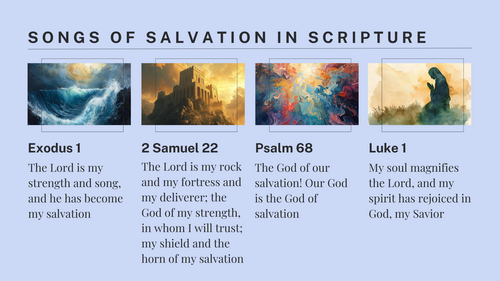
- Moses sang of this in Exodus 15 – “The Lord is my strength and song, and he has become my salvation…”
- David’s song of deliverance in II Samuel 22 – “The Lord is my rock and my fortress and my deliverer; The God of my strength, in whom I will trust; My shield and the horn of my salvation,…”
- David again sings in Psalm 68 ‘ “The God of our salvation! Our God is the God of salvation…”
- Mary sang of this in Luke 1 – “My soul magnifies the Lord, and my spirit has rejoiced in God, my Savior…”
In epic and musical form, Habakkuk offers a prayer rejoicing in hope; past, present and future, even amid personal, national and worldly turmoil.
Let’s stop here for a moment… Should we, as believers today, recall and rehearse the things that God did in Israel’s history and claim that hope for our own? Or was that just for them? Should we recall and rehearse that which is recorded in the NT as God showed his faithfulness to the first century church? Outside of Scripture, should we read and recount God’s deliverance of his followers down through the next 19 centuries? Should I recall the faithfulness of God demonstrated in the recent, brief history of my life and church? Should I consider Revelation, looking eagerly ahead to God’s faithfulness until the end of time and the ushering in of eternity future? YES, YES, YES, YES AND YES! The hall of faith in Hebrews 11 is followed by the challenge to believers to consider and remember that we are surrounded by that “great cloud of witnesses”.
So, to again tie back to 2:4 - The righteous person’s faith grows through trials as he remembers/rehearses ALL that God has done, both in his life and others.
Faith rejoices in God, my Savior. (Hab 3:16-19)
v. 16-17 It is interesting to contemplate these three sentences. Habakkuk has laid a solid theological foundation of who God is and what He has done. He will end by rejoicing and resting in what God will do. This is right and proper. Bookended within this triumphant hope is the rollercoaster of reality in which he finds himself as a natural man living in a fallen world. I think this is a place to which we can relate.
v. 16 - He admits to the reality of what he will likely witness and experience during the Babylonian siege. It frankly reduces him to a physical wreck, chattering teeth, knocking knees, incontinence. Uncontrollable physical response to terror.
Then, an interesting observation:
The phrase: NKJV “That I might rest in the day of trouble..” may also be translated as: “Yet I quietly wait for the day of trouble to come upon people who invade us.” (ESV)
He must endure this terror quietly as he waits for God to bring subsequent judgement upon the oppressor.
v. 17 - Then, he continues this reality check by making detailed inventory of what they will lack. The result? Severe starvation. Elsewhere in the prophets, the sobering realities of starvation during a siege a shockingly detailed.
However, he uses a key word in this which changes everything, “though”. “Though the fig tree should not blossom, though the labor of the olive may fail, though the flock may be cut off…” although we will face starvation….
v. 18 - “YET I will rejoice in YHWH, I will joy in the God of my salvation.” This exultation is a declaration that Habakkuk’s love for God is not based on what he expects God to give him in this life. Though he will endure suffering, deprivation and loss, he will rejoice in the God of his salvation. Here is one of the strongest manifestations of faith, rooted back to God’s words in 2:4 – which may be translated, perhaps more fully to: The righteous shall live by his faithfulness. This could be expanded to what is at the end of our notes…..
A person with true faith in God endures hardship in the present with true joy because he rests in God’s character and promises, even if the immediate circumstances of life seem to contradict.
v. 19 – Is there anything more to say? Yes, and it is not insignificant. “God, my strength…” Here, and elsewhere in Scripture this phrase expresses furthest, deepest statement of rest in the assurance and unshaking security of the man who trusts God by faith.
Many of the Psalms and other prophets contain strong and encouraging reminders of these precious truths, God my salvation and God my strength. Listed in the notes are several upon which you may wish to meditate further.
>>> Psalm 18:2,46, 25:5, 62:1, 73:26, 88:1, Isaiah 12:2, 61:10, Micah 7:7 <<<
We have considered personal application at several points along the way. We know that the precious Words of God found here in this seemingly inconspicuous writing of an otherwise unknown man is not isolated. The call to a life of growing faithfulness is repeated throughout the Bible. So, we’ll conclude with the call of James 1:2-4:
“My brethren, count it all joy when you fall into various trials, knowing that the testing of your faith produces patience/steadfastness. But let patience have its perfect work, that you may be perfect and complete, lacking nothing.”
Discussion
Life101
- Can you remember experiencing something that left you with a sense of awe?
- What could we change about our habits to feel this way about God regularly?
- What does Habakkuk’s progression from praying about the people and injustice around him to focusing on God in worship reveal about him?
- How might this explain his ability to submit his doubts and fears to God in a righteous way?
- What are some habits we can build to be like Habakkuk in this way?
- The sermon tells us that the righteous person’s faith grows through trials as he remembers/rehearses ALL that God has done What are some examples things which God has done in the physical world that we can “rehearse” to worship Him?
- What about some spiritual things that God has done?
- Multiple references to the first promise of the Gospel in Gen. 3:15 are made in Hab. 3:12-13. How can the future hope of the Gospel enhance worship through rehearsal of God’s acts?
Posted in Sermon Manuscript
Posted in From Fear to Faith, Forever Faithful, Old Testament, Habakkuk, Minor Prophets, Faith, Praise, Confidence, Perseverance
Posted in From Fear to Faith, Forever Faithful, Old Testament, Habakkuk, Minor Prophets, Faith, Praise, Confidence, Perseverance
Recent
Archive
2026
February
March
April
May
July
2025
January
February
March
June
August
December
No Comments