
Marks of a Proud Generation
Proverbs 30:11-14, 17, 20
Sometimes government agencies, such as departments of health, or public health organizations promote awareness and prevention campaigns to help people recognize the warning signs of conditions or diseases that might otherwise be overlooked.
Sometimes government agencies, such as departments of health, or public health organizations promote awareness and prevention campaigns to help people recognize the warning signs of conditions or diseases that might otherwise be overlooked.
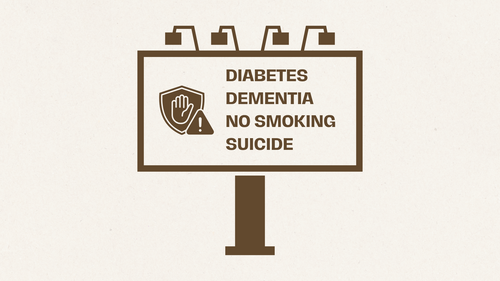
Smoking and tobacco prevention, HIV/AIDS awareness and prevention, diabetes and heart diseases awareness, cancer screening campaigns, dementia awareness and prevention, etc. are examples of what they might educate about and warn against.
They do this through brochures and fact sheets, commercials, billboards, posters, and signs, social media campaigns, public service announcements, screening events, and so on. They do these things so people will recognize early symptoms and take action before their condition worsens.
You may be familiar with similar campaigns raising awareness about problems like bullying, cyber-security/phishing threats, domestic violence, human trafficking, drunk driving, scam and fraud, and suicide.
The proverbs we’re looking at today serve a similar purpose. They raise awareness of certain kinds of people, and they do this for at least two reasons. One, so we can identify symptoms of these problems in our own lives and resolve the problem before it worsens. Two, so we can identify people like this around us so we can respond to them with caution and wisdom, not choosing them as influences, friends, and partners in our lives.In Prov 30:11-14, you can see four groups of people that Agur describes. Each time he says, “There is a generation that …” and them describes them in a particular way.
The word generation often refers to a group of people which are defined or grouped together based upon their shared place and time in history. There was the generation of Israel, for instance, who were rescued from slavery in Egypt and who wandered in the wilderness for 40 years, then there was another subsequent generation of Israel who were born during that time and then entered into the Promised Land.
We use the word generation today to categorize groupings of people in our nation who were born within certain periods of time and who share some general, universal qualities. We label them as The Silent Generation, Baby Boomers, Gen X, Millennials, Gen Z, Gen Alpha, Gen Beta, etc.
In Prov 30:11-14, generation doesn’t refer to people groups by times of birth but to people grouped by certain characteristics. You might translate this by saying, “There are people like this, and there are people like this.” Or you might say, “Some people are like this, and other people are like this.”
In this case, Agur points out these people because they are very harmful, problematic people. These kinds of people are not necessarily rare or hard to find – there might be many of them in any place at any point in time, but even if they are many, their presence and influence might easily be overlooked or underestimated.
In his book called “Respectable Sins,” Jerry Bridges observes that Christians often focus on certain major societal sins while neglecting other spiritually damaging behaviors. These sins may fit into this category and must be pointed out for a person to live a wise and godly life.
Which is worse? A house on fire or a house infested with mold? While one is visually obvious and the other is harder to see, both are serious problems which make the house dangerous and unlivable. So, it is with these kinds of sins and these kinds of people. These kinds of sins in our own heart and these kinds of people in our lives, churches, and society are more harmful than we may realize. A wise person will acknowledge this and take account for that in his life.
So, with this perspective clearly in mind, let’s take a look at four kinds of sins and people which Scripture says are especially harmful to a wise life and godly society.
A wise person takes note of disrespectful tendencies and people.
There is a generation that curses its father, and does not bless its mother.
This first proverb raises awareness of disrespectful people. It gives the signs or symptoms of this disrespect in both a positive and negative way. Ironically, it uses a positive form to state the negative description, then it uses a negative form to state the positive description. This kind of person does curse his father and does not bless his mother.
By making separate statements about father and mother, Agur does not describe two different problems but rather emphasizes or doubles down on the same problem. This is a person who callously despises and disregards his parents, which is the opposite of honoring and valuing them.
To curse means to treat someone as insignificant and small, to dishonor them. This can include attitudes of disdain and disrespect, and it can also include public, verbalized prayers and wishes calling for their harm and pain, desiring bad things to happen to them.
To “not bless” is the opposite way of saying the same thing. It means that while harboring a negative, spiteful attitude and calling for bad things in their lives, a person also refuses to say anything balancing or positive towards them. By saying this, Agur emphasizes the seriousness of this problem. It is not a passing attitude or errant comment but a person’s deep-seated resentment of his parents.
Can you imagine sitting in the doctor’s office waiting for the doctor to arrive, looking around at the various posters hanging on the wall, raising awareness of certain diseases and health concerns? Can you imagine seeing a poster hanging on the wall that warns against the problem of disrespect towards parents? Would that catch your attention?
In a WSJ article published this week, an author raises awareness of an alarming trend therapeutic counseling today. Therapeutic counselors are increasingly advising their clients cut off ties with their parents in instances where their clients feel that their parents’ weaknesses or failures are a key reason for their own personal struggles. It states:
Proponents of the trend hold that advising patients to consider a cutoff from a close relative or spouse they deem toxic or unsupportive can protect their mental health and allow for emotional growth. Meanwhile, critics—many of whom are researchers who have studied relationships for decades—say that it encourages self-centeredness and self-delusion and ruins families.
Most therapists agree that sometimes people are justified in breaking ties with their parents or a close relative, especially if they were physically or emotionally abusive.
What’s changing now is the bar for what is deemed abusive enough for a cutoff. “We are in a culture where we emphasize fragility, everything becomes trauma, and the solution increasingly is to split and leave,” says William Doherty, a therapist and professor emeritus of family social science at the University of Minnesota who has researched the ways that therapy may be harmful. “But it should be the tragic exception that you cut off a parent or loved one, not business as usual in therapy.”
This trend is a symptom of an underlying, widespread problem about which Agur raises our awareness. He even says more about this problem in v. 17.
The eye that mocks his father, and scorns obedience to his mother, the ravens of the valley will pick it out, and the young eagles will eat it.
“Mocks” means to “make fun of” and “scorns to obey” means to “have deep, strong negative feelings about one’s duty.” In this case, it describes a person who makes fun of his parents and who is deeply repulsed by any sense of obligation to his parents.
When a person tolerates this sort of attitude towards his parents, he should not be surprised when he faces an uncomfortable, unfortunate death and receives no honor or respect from others. That’s what “ravens and eagles eating his eyes” describes, a person who dies, and his corpse is left abandoned in the field, with no one to bury him or honor his memory. People who dishonor may feel justified in the present but in the end, in the future, their disrespect for their parents will come back to haunt them.
A wise person takes note of hypocritical tendencies and people.
There is a generation that is pure in its own eyes, yet is not washed from its filthiness.
This second proverb raises awareness of hypocritical tendencies and people. The symptoms and warning signs are rather obvious, which in this case is ironic. The symptoms are “filthiness,” which alludes to the vomit of a drunken person (Isa 28:8) or to human feces and waste (2 Kgs 18:27; Isa 36:12). Have you ever interacted with a person who never showers and who never cleans themselves after using the toilet? Have you ever spent time with a person who vomits all over themselves but never changes clothes?
But the problem here is not poor hygiene but an extreme lack of self-awareness and self-reflection. The problem is that such a person is “clean” in her own eyes – she thinks that she is okay. This means that she has a false sense of being good before God and others when, in fact, she is quite the opposite. In v. 20, Agur says more about this problem:
This is the way of an adulterous woman: she eats and wipes her mouth, and says, “I have done no wickedness.”
Here, he describes a person who engages in immoral behavior, then moves on with life as if everything is okay. No big deal. Such a person, to use terminology from Paul, has a “seared conscience” (1 Tim 4:2), or as Paul specifically says, people whose consciences have been “seared with a hot iron.” Their moral sensitivity is so dull or desensitized that they can commit egregious sin and with zero remorse and think they’re doing fine.
This activity describes much of the entertainment (esp. so-called “adult” entertainment) industry today. It describes those who promote and participate in abortions, sex-change procedures, promiscuous dating, human trafficking, illicit drug dealing, and more. It especially describes those who participate and are complicit in such things with no guilt or remorse.
So, it goes without saying that we should beware of tendencies and people like this in your life and avoid them. That’s what a wise person will do. They will look for the signs and symptoms and take steps to sensitive their conscience by training it with God’s Word and not befriending or engaging with people who behave this way.
Her house is the way to hell, descending to the chambers of death. (Prov 7:27)
Don’t let a calloused or seared conscience deceive or fool you. Participating in egregious and immoral sin is no light matter, nor is it harmless. Not only will you experience painful, serious consequences eventually in this life that you cannot control, you will – as like disrespectful people – very likely face a painful, unfortunate, dishonorable death, likely dying before the usual time. A wise person will acknowledge this and turn away.
A wise person takes note of arrogant tendencies and people.
There is a generation—oh, how lofty are their eyes! And their eyelids are lifted up.
This third proverb raises awareness about tendencies and people who are arrogant, people with “lofty eyes” and “highly lifted eyelids.” Another way to describe these people is that they walk around with their nose stuck up in the air, looking down on others and expecting everyone else to look up to them.
Sometimes young people have a reputation for being this way. Employers, for instance, complain about teenagers and college students entering the workforce expecting everyone to give them special treatment in the same way or better than people who’ve been in the workforce for a long time are treated.
While this may be a trend, it’s not a new problem, nor is it limited to “young people these days.” There are people like this in every stage of life and at every time in history. I like to describe this problem as “taking yourself too seriously.”
Earlier in Proverbs, King Solomon said this to his son Rehoboam:
Surely, he [God] scorns the scornful, but gives grace to the humble. (Prov 3:34)
Then both Paul and Peter repeat this truth in the NT, saying:
God resists the proud, but gives grace to the humble. (Jam 4:6; 1 Pt 5:5)
Solomon also said:
“Six things the Lord hates, yes, seven are an abomination to him: a proud look …” (Prov 6:16)
Friends, arrogance is not a minor, respectable, tolerable sin. It is a serious sin that must be noticed and avoided. Signs of this tendency in your life can include:
If you notice these symptoms in your life, then let me encourage you to humble yourself before God.
Pride goes before destruction, and a haughty spirit before a fall. Better to be of a humble spirit with the lowly, than to divide the spoil with the proud. (Prov 16:18-19)
If you don’t, then as with disrespect, destruction and humiliation will be in your future. That’s why a wise person will learn to be aware of this problem before he travels too far down this road.
A wise person takes note of predatory tendencies and people.
There is a generation whose teeth are like swords, and whose fangs are like knives, to devour the poor from off the earth, and the needy from among men.
This fourth proverb raises awareness about tendencies and people who take advantage of other people. And by taking four lines to give this warning rather than only two lines, as with the previous three warnings, Agur indicates that he views this as an especially serious problem.
He describes these people as having “teeth” and “fangs,” which pictures them as “a hungry, wild animal that tears the flesh of its prey with its sharp teeth” (Reyburn and Fry). But he mixes this animal analogy with a more human analogy when he mentions “swords” and “knives,” which are weapons people use for injuring and killing other people.
While people who commit violence may be included in this problem, that does not seem to be the emphasis that Agur is making. First, he focuses on the teeth of these people, that is to say, their mouths. Through their words, they cause damage and take advantage of other people.
Furthermore, Agur focuses upon a certain kind of person as their victims. They don’t just target anyone indiscriminately. They target defenseless, helpless, hurting, needy people. In other words, these people routinely take advantage of people in need.
Today, people like this include the people behind fraud schemes and scams, people who befriend lonely, insecure people to manipulate and use them, religious teachers who exploit for money people with spiritual needs, payday lenders, bosses or employers who take advantage of desperate workers by underpaying and overworking them, and politicians who use people’s suffering as a means for their own advancement.
Predatory people are those who smell weakness the way a wild animal smells blood; they use words, systems, relationships, money, or influence to take from people who are already poor, needy, wounded, or defenseless.
They do this through brochures and fact sheets, commercials, billboards, posters, and signs, social media campaigns, public service announcements, screening events, and so on. They do these things so people will recognize early symptoms and take action before their condition worsens.
You may be familiar with similar campaigns raising awareness about problems like bullying, cyber-security/phishing threats, domestic violence, human trafficking, drunk driving, scam and fraud, and suicide.
The proverbs we’re looking at today serve a similar purpose. They raise awareness of certain kinds of people, and they do this for at least two reasons. One, so we can identify symptoms of these problems in our own lives and resolve the problem before it worsens. Two, so we can identify people like this around us so we can respond to them with caution and wisdom, not choosing them as influences, friends, and partners in our lives.In Prov 30:11-14, you can see four groups of people that Agur describes. Each time he says, “There is a generation that …” and them describes them in a particular way.
The word generation often refers to a group of people which are defined or grouped together based upon their shared place and time in history. There was the generation of Israel, for instance, who were rescued from slavery in Egypt and who wandered in the wilderness for 40 years, then there was another subsequent generation of Israel who were born during that time and then entered into the Promised Land.
We use the word generation today to categorize groupings of people in our nation who were born within certain periods of time and who share some general, universal qualities. We label them as The Silent Generation, Baby Boomers, Gen X, Millennials, Gen Z, Gen Alpha, Gen Beta, etc.
In Prov 30:11-14, generation doesn’t refer to people groups by times of birth but to people grouped by certain characteristics. You might translate this by saying, “There are people like this, and there are people like this.” Or you might say, “Some people are like this, and other people are like this.”
In this case, Agur points out these people because they are very harmful, problematic people. These kinds of people are not necessarily rare or hard to find – there might be many of them in any place at any point in time, but even if they are many, their presence and influence might easily be overlooked or underestimated.
In his book called “Respectable Sins,” Jerry Bridges observes that Christians often focus on certain major societal sins while neglecting other spiritually damaging behaviors. These sins may fit into this category and must be pointed out for a person to live a wise and godly life.
Which is worse? A house on fire or a house infested with mold? While one is visually obvious and the other is harder to see, both are serious problems which make the house dangerous and unlivable. So, it is with these kinds of sins and these kinds of people. These kinds of sins in our own heart and these kinds of people in our lives, churches, and society are more harmful than we may realize. A wise person will acknowledge this and take account for that in his life.
So, with this perspective clearly in mind, let’s take a look at four kinds of sins and people which Scripture says are especially harmful to a wise life and godly society.
A wise person takes note of disrespectful tendencies and people.
There is a generation that curses its father, and does not bless its mother.
This first proverb raises awareness of disrespectful people. It gives the signs or symptoms of this disrespect in both a positive and negative way. Ironically, it uses a positive form to state the negative description, then it uses a negative form to state the positive description. This kind of person does curse his father and does not bless his mother.
By making separate statements about father and mother, Agur does not describe two different problems but rather emphasizes or doubles down on the same problem. This is a person who callously despises and disregards his parents, which is the opposite of honoring and valuing them.
To curse means to treat someone as insignificant and small, to dishonor them. This can include attitudes of disdain and disrespect, and it can also include public, verbalized prayers and wishes calling for their harm and pain, desiring bad things to happen to them.
To “not bless” is the opposite way of saying the same thing. It means that while harboring a negative, spiteful attitude and calling for bad things in their lives, a person also refuses to say anything balancing or positive towards them. By saying this, Agur emphasizes the seriousness of this problem. It is not a passing attitude or errant comment but a person’s deep-seated resentment of his parents.
Can you imagine sitting in the doctor’s office waiting for the doctor to arrive, looking around at the various posters hanging on the wall, raising awareness of certain diseases and health concerns? Can you imagine seeing a poster hanging on the wall that warns against the problem of disrespect towards parents? Would that catch your attention?
In a WSJ article published this week, an author raises awareness of an alarming trend therapeutic counseling today. Therapeutic counselors are increasingly advising their clients cut off ties with their parents in instances where their clients feel that their parents’ weaknesses or failures are a key reason for their own personal struggles. It states:
Proponents of the trend hold that advising patients to consider a cutoff from a close relative or spouse they deem toxic or unsupportive can protect their mental health and allow for emotional growth. Meanwhile, critics—many of whom are researchers who have studied relationships for decades—say that it encourages self-centeredness and self-delusion and ruins families.
Most therapists agree that sometimes people are justified in breaking ties with their parents or a close relative, especially if they were physically or emotionally abusive.
What’s changing now is the bar for what is deemed abusive enough for a cutoff. “We are in a culture where we emphasize fragility, everything becomes trauma, and the solution increasingly is to split and leave,” says William Doherty, a therapist and professor emeritus of family social science at the University of Minnesota who has researched the ways that therapy may be harmful. “But it should be the tragic exception that you cut off a parent or loved one, not business as usual in therapy.”
This trend is a symptom of an underlying, widespread problem about which Agur raises our awareness. He even says more about this problem in v. 17.
The eye that mocks his father, and scorns obedience to his mother, the ravens of the valley will pick it out, and the young eagles will eat it.
“Mocks” means to “make fun of” and “scorns to obey” means to “have deep, strong negative feelings about one’s duty.” In this case, it describes a person who makes fun of his parents and who is deeply repulsed by any sense of obligation to his parents.
When a person tolerates this sort of attitude towards his parents, he should not be surprised when he faces an uncomfortable, unfortunate death and receives no honor or respect from others. That’s what “ravens and eagles eating his eyes” describes, a person who dies, and his corpse is left abandoned in the field, with no one to bury him or honor his memory. People who dishonor may feel justified in the present but in the end, in the future, their disrespect for their parents will come back to haunt them.
A wise person takes note of hypocritical tendencies and people.
There is a generation that is pure in its own eyes, yet is not washed from its filthiness.
This second proverb raises awareness of hypocritical tendencies and people. The symptoms and warning signs are rather obvious, which in this case is ironic. The symptoms are “filthiness,” which alludes to the vomit of a drunken person (Isa 28:8) or to human feces and waste (2 Kgs 18:27; Isa 36:12). Have you ever interacted with a person who never showers and who never cleans themselves after using the toilet? Have you ever spent time with a person who vomits all over themselves but never changes clothes?
But the problem here is not poor hygiene but an extreme lack of self-awareness and self-reflection. The problem is that such a person is “clean” in her own eyes – she thinks that she is okay. This means that she has a false sense of being good before God and others when, in fact, she is quite the opposite. In v. 20, Agur says more about this problem:
This is the way of an adulterous woman: she eats and wipes her mouth, and says, “I have done no wickedness.”
Here, he describes a person who engages in immoral behavior, then moves on with life as if everything is okay. No big deal. Such a person, to use terminology from Paul, has a “seared conscience” (1 Tim 4:2), or as Paul specifically says, people whose consciences have been “seared with a hot iron.” Their moral sensitivity is so dull or desensitized that they can commit egregious sin and with zero remorse and think they’re doing fine.
This activity describes much of the entertainment (esp. so-called “adult” entertainment) industry today. It describes those who promote and participate in abortions, sex-change procedures, promiscuous dating, human trafficking, illicit drug dealing, and more. It especially describes those who participate and are complicit in such things with no guilt or remorse.
So, it goes without saying that we should beware of tendencies and people like this in your life and avoid them. That’s what a wise person will do. They will look for the signs and symptoms and take steps to sensitive their conscience by training it with God’s Word and not befriending or engaging with people who behave this way.
Her house is the way to hell, descending to the chambers of death. (Prov 7:27)
Don’t let a calloused or seared conscience deceive or fool you. Participating in egregious and immoral sin is no light matter, nor is it harmless. Not only will you experience painful, serious consequences eventually in this life that you cannot control, you will – as like disrespectful people – very likely face a painful, unfortunate, dishonorable death, likely dying before the usual time. A wise person will acknowledge this and turn away.
A wise person takes note of arrogant tendencies and people.
There is a generation—oh, how lofty are their eyes! And their eyelids are lifted up.
This third proverb raises awareness about tendencies and people who are arrogant, people with “lofty eyes” and “highly lifted eyelids.” Another way to describe these people is that they walk around with their nose stuck up in the air, looking down on others and expecting everyone else to look up to them.
Sometimes young people have a reputation for being this way. Employers, for instance, complain about teenagers and college students entering the workforce expecting everyone to give them special treatment in the same way or better than people who’ve been in the workforce for a long time are treated.
While this may be a trend, it’s not a new problem, nor is it limited to “young people these days.” There are people like this in every stage of life and at every time in history. I like to describe this problem as “taking yourself too seriously.”
Earlier in Proverbs, King Solomon said this to his son Rehoboam:
Surely, he [God] scorns the scornful, but gives grace to the humble. (Prov 3:34)
Then both Paul and Peter repeat this truth in the NT, saying:
God resists the proud, but gives grace to the humble. (Jam 4:6; 1 Pt 5:5)
Solomon also said:
“Six things the Lord hates, yes, seven are an abomination to him: a proud look …” (Prov 6:16)
Friends, arrogance is not a minor, respectable, tolerable sin. It is a serious sin that must be noticed and avoided. Signs of this tendency in your life can include:
- Being quick to speak and interrupt but not quick or serious about listening.
- Taking credit quickly but taking blame and responsibility rarely and reluctantly.
- Wanting to be served but not volunteering for service.
- Only serving when it gives a sense of importance and recognition, believing that some jobs are “beneath you.”
- Expecting people to obey rules while ignoring them yourself.
- Never saying ‘thank you.’
- Being easily offended when you are not thanked or acknowledged.
- Dismissive body language.
If you notice these symptoms in your life, then let me encourage you to humble yourself before God.
Pride goes before destruction, and a haughty spirit before a fall. Better to be of a humble spirit with the lowly, than to divide the spoil with the proud. (Prov 16:18-19)
If you don’t, then as with disrespect, destruction and humiliation will be in your future. That’s why a wise person will learn to be aware of this problem before he travels too far down this road.
A wise person takes note of predatory tendencies and people.
There is a generation whose teeth are like swords, and whose fangs are like knives, to devour the poor from off the earth, and the needy from among men.
This fourth proverb raises awareness about tendencies and people who take advantage of other people. And by taking four lines to give this warning rather than only two lines, as with the previous three warnings, Agur indicates that he views this as an especially serious problem.
He describes these people as having “teeth” and “fangs,” which pictures them as “a hungry, wild animal that tears the flesh of its prey with its sharp teeth” (Reyburn and Fry). But he mixes this animal analogy with a more human analogy when he mentions “swords” and “knives,” which are weapons people use for injuring and killing other people.
While people who commit violence may be included in this problem, that does not seem to be the emphasis that Agur is making. First, he focuses on the teeth of these people, that is to say, their mouths. Through their words, they cause damage and take advantage of other people.
Furthermore, Agur focuses upon a certain kind of person as their victims. They don’t just target anyone indiscriminately. They target defenseless, helpless, hurting, needy people. In other words, these people routinely take advantage of people in need.
Today, people like this include the people behind fraud schemes and scams, people who befriend lonely, insecure people to manipulate and use them, religious teachers who exploit for money people with spiritual needs, payday lenders, bosses or employers who take advantage of desperate workers by underpaying and overworking them, and politicians who use people’s suffering as a means for their own advancement.
Predatory people are those who smell weakness the way a wild animal smells blood; they use words, systems, relationships, money, or influence to take from people who are already poor, needy, wounded, or defenseless.
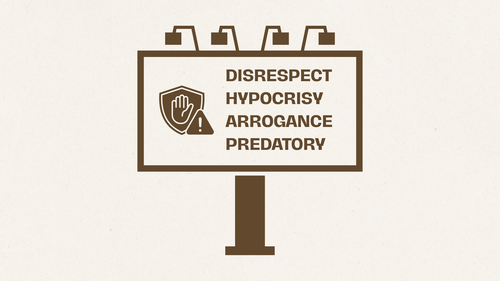
To borrow language from Paul again, we should “mark and avoid” people like this in our lives, unless we have some obligation or opportunity to influence them for Christ (Rom 16:17-18). This means that when we encounter these things in our lives – whether internally or around us – we should take note and do what we can to remove it from with in and avoid it from without.
And if symptoms of these tendencies are present in your own life, be wise, repent, turn to Christ for forgiveness and cleansing. Then get into the Word and into accountable Christian relationships in the church to turn those tendencies and behaviors around.
Confess your trespasses to one another, and pray for one another, that you may be healed. (Jam 5:16)
In Prov 30:12, we were made aware of a person who presumed herself to be washed clean from sin and guilt even though they were not. So, how are we truly cleansed?
We are truly cleansed only one way: by the saving work of Jesus applied to us through repentance and faith. Scripture tells us to the blood of Jesus alone is what cleanses us from our sin in the sight of God.
How much more shall the blood of Christ, who through the eternal Spirit offered Himself without spot to God, cleanse your conscience from dead works to serve the living God? (Heb 9:14)
As we come to the Lord’s Table, we remember that cleansing is not achieved claiming to be “pure in our own eyes” (Prov 30:12). Cleansing comes when we confess our sin honestly, trust the sacrifice of Christ fully, and submit our hearts to his ongoing work of grace.
If we confess our sins, He is faithful and just to forgive us our sins and to cleanse us from all unrighteousness. (1 Jn 1:9)
In a moment, as we take the bread and cup, may we together thank God that Christ’s body was broken, and his blood was poured out to wash us clean from our sins.
Discussion Questions
And if symptoms of these tendencies are present in your own life, be wise, repent, turn to Christ for forgiveness and cleansing. Then get into the Word and into accountable Christian relationships in the church to turn those tendencies and behaviors around.
Confess your trespasses to one another, and pray for one another, that you may be healed. (Jam 5:16)
In Prov 30:12, we were made aware of a person who presumed herself to be washed clean from sin and guilt even though they were not. So, how are we truly cleansed?
We are truly cleansed only one way: by the saving work of Jesus applied to us through repentance and faith. Scripture tells us to the blood of Jesus alone is what cleanses us from our sin in the sight of God.
How much more shall the blood of Christ, who through the eternal Spirit offered Himself without spot to God, cleanse your conscience from dead works to serve the living God? (Heb 9:14)
As we come to the Lord’s Table, we remember that cleansing is not achieved claiming to be “pure in our own eyes” (Prov 30:12). Cleansing comes when we confess our sin honestly, trust the sacrifice of Christ fully, and submit our hearts to his ongoing work of grace.
If we confess our sins, He is faithful and just to forgive us our sins and to cleanse us from all unrighteousness. (1 Jn 1:9)
In a moment, as we take the bread and cup, may we together thank God that Christ’s body was broken, and his blood was poured out to wash us clean from our sins.
Discussion Questions
- What are “respectable sins?”
- How are “respectable sins” like a mold-infested house versus a house on fire?
- What are some obvious societal sins which can be easy to be critical of in some ways?
- What are some less obvious personal sins which are easy to hide?
- What are the biblical problems with the therapeutic trend to cut people off? Especially when it comes to parents?
- How does hypocrisy happen according to 1 Timothy 4:2?
- What are some ways we can avoid being a hypocritical person by dealing with sin in our own lives?
- What are some arrogant tendencies with which you are tempted?
- How does harsh language about sin in the scripture help us to experience God’s grace?
Posted in Sermon Manuscript
Posted in Proverbs, Old Testament, Wisdom, Wisdom in Plain Sight, Pride, Hypocrisy
Posted in Proverbs, Old Testament, Wisdom, Wisdom in Plain Sight, Pride, Hypocrisy
Recent
Archive
2026
February
March
April
May
July
September
2025
January
February
March
June
August
2024
No Comments