
How Long? When God Seems Silent
Habakkuk 1:1-11; 2:4
From Exodus and Deuteronomy, we learned have that God rescued and entered a permanent covenant and commitment with his people. Then, from Hosea, we have learned that God loves his people relentlessly. Even when we turn or wander away from him, he pursues after us with never-ending faithfulness, mercy, and love to restore our relationship with him.
But now we will turn our attention to Habakkuk, another small Old Testament book, to explore a difficult challenge God’s people often face. This challenge is answering the question of how a holy and loving God can permit sin and injustice to keep on happening in the world. Has anyone ever asked you a version of this question? Or have you ever asked this question yourself?
William Tyndale gave the English-speaking world its first English translation of the Bible. He was a faithful follower of Christ who experienced many injustices: forced into exile for translating Scripture into English; hunted across Europe as a criminal; betrayed by a supposed friend; imprisoned for over a year; strangled and burned as a heretic.
Adoniram Judson was the first American and first Baptist missionary to a foreign nation. Though he served Christ faithfully and sacrificially for the duration of his life, he suffered what seemed to be many injustices: lost two wives and multiple children; imprisoned brutally in Burma for nearly two years; subjected to starvation, chains, and illness; labored for seven years before a single convert.
Corrie ten Boom was a Dutch Christian who sheltered Jews during the Holocaust. Despite her courageous faith, she suffered many injustices: betrayed by an informant; arrested and imprisoned by the Gestapo; father died shortly after arrest; sister Betsie died in a concentration camp; Corrie herself endured forced labor, starvation, sickness, and cruelty.
Elisabeth Elliot (who died only 9 years ago) was a faithful Christian missionary, author, and women’s teacher. Though she served Christ faithfully, she experienced many things which seemed unfair and unjust: married missionary Jim Elliot only 10 months before he was murdered by the Huaorani people of Ecuador; widowed at age 29, with a young child; later buried a second husband after he endured years of illness; lived decades under the shadow of many unanswered questions “why?”
Perhaps you know someone like this – a person who has faithfully followed Christ but has suffered many difficult experiences which seem unfair and unjust. Or perhaps that person is you? If God is faithful, loving, and devoted to his people, then why does he let injustice occur? Why does he let injustice happen so widely and so long?
The book of Habakkuk is a short book with a short message, only three chapters long. The man who wrote this book is named Habakkuk. But other than that, we know little about him other than that he was called “Habakkuk the prophet” (Hab 1:1; 3:1). To call himself “the prophet” may mean he had been formally trained in a school for prophets, something which did exist in Israel during the time of David and Saul and also the time of Elijah and Elisha (1 Sam 19:20; 2 Kgs 4:38).
The apocryphal book, Bel and the Dragon, (which is not biblical) claims that Habakkuk was the “son of Jesus of the tribe of Levi,” which would mean he had been born into a priestly family. This book tells the tale of an angel carrying Habakkuk by the hair from Judah to Babylon to drop food for Daniel into the lion’s den. Such claims and stories about Habakkuk are fascinating but of little to no historical, factual value.
While we don’t know much about the man who wrote this message, we do know something about the background of this message. Habakkuk wrote this message during a time of widespread injustice among his people. From the details of this book, it seems that Habakkuk wrote during the reign of the third-to-last king of Judah – Jehoiakim.
From Exodus and Deuteronomy, we learned have that God rescued and entered a permanent covenant and commitment with his people. Then, from Hosea, we have learned that God loves his people relentlessly. Even when we turn or wander away from him, he pursues after us with never-ending faithfulness, mercy, and love to restore our relationship with him.
But now we will turn our attention to Habakkuk, another small Old Testament book, to explore a difficult challenge God’s people often face. This challenge is answering the question of how a holy and loving God can permit sin and injustice to keep on happening in the world. Has anyone ever asked you a version of this question? Or have you ever asked this question yourself?
William Tyndale gave the English-speaking world its first English translation of the Bible. He was a faithful follower of Christ who experienced many injustices: forced into exile for translating Scripture into English; hunted across Europe as a criminal; betrayed by a supposed friend; imprisoned for over a year; strangled and burned as a heretic.
Adoniram Judson was the first American and first Baptist missionary to a foreign nation. Though he served Christ faithfully and sacrificially for the duration of his life, he suffered what seemed to be many injustices: lost two wives and multiple children; imprisoned brutally in Burma for nearly two years; subjected to starvation, chains, and illness; labored for seven years before a single convert.
Corrie ten Boom was a Dutch Christian who sheltered Jews during the Holocaust. Despite her courageous faith, she suffered many injustices: betrayed by an informant; arrested and imprisoned by the Gestapo; father died shortly after arrest; sister Betsie died in a concentration camp; Corrie herself endured forced labor, starvation, sickness, and cruelty.
Elisabeth Elliot (who died only 9 years ago) was a faithful Christian missionary, author, and women’s teacher. Though she served Christ faithfully, she experienced many things which seemed unfair and unjust: married missionary Jim Elliot only 10 months before he was murdered by the Huaorani people of Ecuador; widowed at age 29, with a young child; later buried a second husband after he endured years of illness; lived decades under the shadow of many unanswered questions “why?”
Perhaps you know someone like this – a person who has faithfully followed Christ but has suffered many difficult experiences which seem unfair and unjust. Or perhaps that person is you? If God is faithful, loving, and devoted to his people, then why does he let injustice occur? Why does he let injustice happen so widely and so long?
The book of Habakkuk is a short book with a short message, only three chapters long. The man who wrote this book is named Habakkuk. But other than that, we know little about him other than that he was called “Habakkuk the prophet” (Hab 1:1; 3:1). To call himself “the prophet” may mean he had been formally trained in a school for prophets, something which did exist in Israel during the time of David and Saul and also the time of Elijah and Elisha (1 Sam 19:20; 2 Kgs 4:38).
The apocryphal book, Bel and the Dragon, (which is not biblical) claims that Habakkuk was the “son of Jesus of the tribe of Levi,” which would mean he had been born into a priestly family. This book tells the tale of an angel carrying Habakkuk by the hair from Judah to Babylon to drop food for Daniel into the lion’s den. Such claims and stories about Habakkuk are fascinating but of little to no historical, factual value.
While we don’t know much about the man who wrote this message, we do know something about the background of this message. Habakkuk wrote this message during a time of widespread injustice among his people. From the details of this book, it seems that Habakkuk wrote during the reign of the third-to-last king of Judah – Jehoiakim.
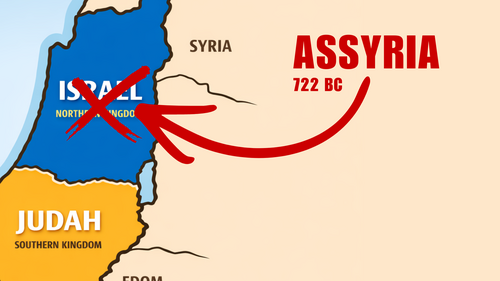
If you recall from previous sermons, Hosea had spoken to the people of Israel. These were the ten tribes of Israel who had settled to the north and who had abandoned worshiping God to worship Baal and to pursue an immoral, wicked lifestyle. As consequence for their sin, God had sent the Assyrian Empire from the northeast to conquer them and take them as captives away to Assyria. This had happened approx. 700 years after God had rescued his people from Egypt and made a permanent covenant with them in love.
Despite the northern kingdom’s rebellion against God, the southern kingdom – called Judah – consisted of the two other tribes of Israel, Judah and Benjamin. They had proven to be more faithful to God, so God had given them a longer period of protection. Even so, they also descended into a widespread ungodly lifestyle, who would also be conquered and invaded by a foreign empire approx. 120 years later (more on this later).
So, here we are to start this book. A man named Habakkuk and who is also a prophet is living in the southern kingdom of Judah nearly 100 years after the northern ten tribes had been taken away to Assyria for their idolatry and immorality. But now God’s people living in the southern two tribes had also become increasingly ungodly. It was this rising and continuing injustice that Habakkuk saw among his own people in Judah that caused him to question God in prayer.
God’s silence sometimes seems unjust to us.
In Hab 1:1, we read an announcement of Habakkuk’s prophecy. What’s interesting about this prophecy, though, is that unlike other OT prophecies, this one is not specifically directed to a group of people. Nowhere here in the introduction or elsewhere in the rest of the book does Habakkuk say God was giving him this message for a particular group of people. Instead, the entire book simply reads as a record of Habakkuk’s own personal interactions with God. And these personal interactions with God begin with two difficult but serious questions that Habakkuk asked God in prayer. We’ll look at the first one here and the second one next week.
God does not always respond immediately to our prayers.
In this first question, Habakkuk asks “how long” he must pray to receive an answer from God. He explains to God in v.2 that no matter how long and how frequently he prays, God doesn’t seem to answer.
O Lord, how long shall I cry, and You will not hear?
And he also explains in v.2 that no matter how intensely he prays and how serious his prayers seem to be, God still doesn’t seem to answer.
Even cry out to You, “Violence!” and You will not save.
This word ‘violence’ is translated from the Hebrew word hamas, which does certainly have modern-day parallels, for sure – so you can get a feel for what Habakkuk was describing. Only here, he wasn’t describing to violent activities of foreign, Muslim terrorists, he was describing the commonplace activities of God’s own people in Judah. Violence had become commonplace and nothing was being done about it. As we read in v.4:
The law is powerless, and justice never goes forth. For the wicked surround the righteous; therefore, perverse judgment proceeds.
Habakkuk’s point here is that violence was not being restrained or punished because the judges, priests, kings, and any other enforcers of the Mosaic law were themselves behaving in ungodly and unjust ways. From the words he uses in v.3, we see that theft and abuse, lawsuits and arguments were common and increasing. Sounds a lot like America and our world today, does it not?
God does not resolve every injustice immediately.
The problem for Habakkuk, though, was not necessarily that injustice was occurring, but that his prayers to God weren’t causing any change or bringing about any divine intervention. If he prayed long enough and hard enough, wouldn’t God do something about this widespread problem? So, for the Hosea, the question was not necessarily about why people were being unjust and abusive, the question was whether or not God was himself being unjust by doing nothing about injustice.
From this opening question and prayer, though, we are forced to acknowledge that God does not answer our prayers for justice immediately, the first time we pray them. Nor does he resolve every injustice immediately. Like a good fisherman, he knows how to “let the line go out” before he yanks the hook.
In many types of fishing, especially with live bait or certain species, the fisherman doesn’t set the hook immediately. Instead, he allows the fish to fully take the bait, commit to the line, and move away before he applies resistance. If he pulls too soon, the fish may spit out the bait, or the hook won’t set completely. A good fisherman knows that good timing is often better than sheer force. He also knows that it is sometimes necessary to let the line out to redirect the fish he wants to catch from rocks, weeds, logs, and other snags. Rather than overpowering the fish, he allows it to have some controlled freedom, waits for it to get into the best position, then yanks the hook and pulls the line at full strength at just the right moment. It’s often true that you won’t get the fish by dominating it immediately but by wearing it down over time.
God is this way and more in matters of justice. From our way of thinking and on our limited vantage point and way of viewing time, it may seem that he is slow and unresponsive to correct and judge injustice. But he often “lets the line go out” and “gives a long leash.” He does this for many reasons which only he alone can fully comprehend. But one such reason is that he is longsuffering, desiring for as many people to be saved as possible.
The Lord is not slack concerning His promise, as some count slackness, but is longsuffering toward us, not willing that any should perish but that all should come to repentance. (2 Pet 3:9)
Think about it this way, where would you be today if God had yanked the hook on you as soon and swiftly as possible? Aren’t you glad he was long-suffering and patient with you? Maybe he is still being so towards you today. If so, let me encourage you to repent from your sins and turn to Christ for salvation and restoration today. You don’t know how much longer he will suffer your sinful and unjust behavior.
God does not guarantee to shield his people from injustice.
Another feature of Habakkuk’s question and prayer to God here is this – that he wonders why and how long God will allow him to experience injustice personally. It’s one thing for us to read national and international headlines and see frequent, growing headlines about all kinds of injustice that’s going on. We can and should rightly be bothered and concerned by that. But the problem becomes far more difficult when injustice affects us in a local, personal, and direct way. Notice Habakkuk’s emphasis on this aspect of injustice:
Why do you show me iniquity, and cause me to see trouble? For plundering and violence are before me …” (3:3)
When injustice affects you personally – or someone else who is close to you – then this question hits especially hard. Why does God seem silent? Why does God let injustice continue to occur, seemingly without consequence, while his own people who trust in him have to live with it, see it, and experience it daily?
Well, from Habakkuk’s opening question and prayer to God, we see that God does not guarantee to shield his own people from injustice. Not even his own Son, Jesus Christ, was shielded from injustice, so why should we be any different?
God’s silence doesn’t mean he has no plan.
As we consider the question of how God’s silence can seem unjust, enabling injustice to increasingly occur, what follows next in Habakkuk’s conversation with God shows us that God’s silence doesn’t mean he has no plan.
God is not challenged or upset by our questions.
First, though, we need to know that God is not challenged or upset by our questions. To be sure, not all questions to God are of equal value. Some questions are cynical and sarcastic, not looking for a genuine answer. Some questions are rooted in hard-hearted unbelief and rebellion. But some questions are the result of our simple, childlike inability to understand God’s ways and a sincere desire to figure things out and make sense of a difficult, seemingly contradictory situation.
Throughout Scripture, people of genuine faith asked God similar questions:
While God has zero obligation to answer our questions or to tell us what he is going to do about the injustices we experience, we can also know that he is a big God who is more than able to take our questions. Whether our questions are good ones or not, and whether he can answer them or not, we can always take our confusion and frustration to him in prayer and know that he is just – even in his answer or choice not to answer.
For God, our questions are no problem at all, and for us, our questions are often not a detriment to our faith but a pathway to deeper, stronger faith. Because the more we ask genuine questions of God, the more we will learn about him and learn to trust him. Do you have any questions that you need to ask God today, even if he doesn’t answer?
When we ask questions of God today, we should not look for some verbal or visual answers, such as a personal revelation of prophecy or a dream of vision of some kind. Instead, we should look to God’s Word to see what it says about our question, and we should do such study of God’s Word in a careful, prayerful way.
Your word is a lamp to my feet and a light to my path. (Psa 119:105)
We should not simply “open the Bible and point to a verse on whatever page it falls to,” but we should do a diligent search to study what the Bible actually says about whatever the topic or nature of our question might be.
[The Bereans] … received the word with all readiness, and searched the Scriptures daily to find out whether these things were so. (Acts 17:11)
We should be like the Christians in Berea and be people who not only pray to God about our questions but who also carefully study God’s Word to discover whatever answers we can find.
God’s plans are more impressive than we comprehend.
For Habakkuk, since he was a OT prophet, God gave him a more specific answer to his prayer, and we find this answer in 1:5-11. Before giving his answer, he prepares Habakkuk for what he is about to hear (1:5):
Look among the nations and watch—be utterly astounded! For I will work a work in your days Which you would not believe, though it were told you.
With these words, it is as though God is saying, “Brace yourself, Habakkuk, because what I am about to tell you is going to absolutely blow you away.” The words ‘utterly astounded’ means something like being “frozen stiff with amazement” or “absolutely astonished and amazed.”
Despite the northern kingdom’s rebellion against God, the southern kingdom – called Judah – consisted of the two other tribes of Israel, Judah and Benjamin. They had proven to be more faithful to God, so God had given them a longer period of protection. Even so, they also descended into a widespread ungodly lifestyle, who would also be conquered and invaded by a foreign empire approx. 120 years later (more on this later).
So, here we are to start this book. A man named Habakkuk and who is also a prophet is living in the southern kingdom of Judah nearly 100 years after the northern ten tribes had been taken away to Assyria for their idolatry and immorality. But now God’s people living in the southern two tribes had also become increasingly ungodly. It was this rising and continuing injustice that Habakkuk saw among his own people in Judah that caused him to question God in prayer.
God’s silence sometimes seems unjust to us.
In Hab 1:1, we read an announcement of Habakkuk’s prophecy. What’s interesting about this prophecy, though, is that unlike other OT prophecies, this one is not specifically directed to a group of people. Nowhere here in the introduction or elsewhere in the rest of the book does Habakkuk say God was giving him this message for a particular group of people. Instead, the entire book simply reads as a record of Habakkuk’s own personal interactions with God. And these personal interactions with God begin with two difficult but serious questions that Habakkuk asked God in prayer. We’ll look at the first one here and the second one next week.
God does not always respond immediately to our prayers.
In this first question, Habakkuk asks “how long” he must pray to receive an answer from God. He explains to God in v.2 that no matter how long and how frequently he prays, God doesn’t seem to answer.
O Lord, how long shall I cry, and You will not hear?
And he also explains in v.2 that no matter how intensely he prays and how serious his prayers seem to be, God still doesn’t seem to answer.
Even cry out to You, “Violence!” and You will not save.
This word ‘violence’ is translated from the Hebrew word hamas, which does certainly have modern-day parallels, for sure – so you can get a feel for what Habakkuk was describing. Only here, he wasn’t describing to violent activities of foreign, Muslim terrorists, he was describing the commonplace activities of God’s own people in Judah. Violence had become commonplace and nothing was being done about it. As we read in v.4:
The law is powerless, and justice never goes forth. For the wicked surround the righteous; therefore, perverse judgment proceeds.
Habakkuk’s point here is that violence was not being restrained or punished because the judges, priests, kings, and any other enforcers of the Mosaic law were themselves behaving in ungodly and unjust ways. From the words he uses in v.3, we see that theft and abuse, lawsuits and arguments were common and increasing. Sounds a lot like America and our world today, does it not?
God does not resolve every injustice immediately.
The problem for Habakkuk, though, was not necessarily that injustice was occurring, but that his prayers to God weren’t causing any change or bringing about any divine intervention. If he prayed long enough and hard enough, wouldn’t God do something about this widespread problem? So, for the Hosea, the question was not necessarily about why people were being unjust and abusive, the question was whether or not God was himself being unjust by doing nothing about injustice.
From this opening question and prayer, though, we are forced to acknowledge that God does not answer our prayers for justice immediately, the first time we pray them. Nor does he resolve every injustice immediately. Like a good fisherman, he knows how to “let the line go out” before he yanks the hook.
In many types of fishing, especially with live bait or certain species, the fisherman doesn’t set the hook immediately. Instead, he allows the fish to fully take the bait, commit to the line, and move away before he applies resistance. If he pulls too soon, the fish may spit out the bait, or the hook won’t set completely. A good fisherman knows that good timing is often better than sheer force. He also knows that it is sometimes necessary to let the line out to redirect the fish he wants to catch from rocks, weeds, logs, and other snags. Rather than overpowering the fish, he allows it to have some controlled freedom, waits for it to get into the best position, then yanks the hook and pulls the line at full strength at just the right moment. It’s often true that you won’t get the fish by dominating it immediately but by wearing it down over time.
God is this way and more in matters of justice. From our way of thinking and on our limited vantage point and way of viewing time, it may seem that he is slow and unresponsive to correct and judge injustice. But he often “lets the line go out” and “gives a long leash.” He does this for many reasons which only he alone can fully comprehend. But one such reason is that he is longsuffering, desiring for as many people to be saved as possible.
The Lord is not slack concerning His promise, as some count slackness, but is longsuffering toward us, not willing that any should perish but that all should come to repentance. (2 Pet 3:9)
Think about it this way, where would you be today if God had yanked the hook on you as soon and swiftly as possible? Aren’t you glad he was long-suffering and patient with you? Maybe he is still being so towards you today. If so, let me encourage you to repent from your sins and turn to Christ for salvation and restoration today. You don’t know how much longer he will suffer your sinful and unjust behavior.
God does not guarantee to shield his people from injustice.
Another feature of Habakkuk’s question and prayer to God here is this – that he wonders why and how long God will allow him to experience injustice personally. It’s one thing for us to read national and international headlines and see frequent, growing headlines about all kinds of injustice that’s going on. We can and should rightly be bothered and concerned by that. But the problem becomes far more difficult when injustice affects us in a local, personal, and direct way. Notice Habakkuk’s emphasis on this aspect of injustice:
Why do you show me iniquity, and cause me to see trouble? For plundering and violence are before me …” (3:3)
When injustice affects you personally – or someone else who is close to you – then this question hits especially hard. Why does God seem silent? Why does God let injustice continue to occur, seemingly without consequence, while his own people who trust in him have to live with it, see it, and experience it daily?
Well, from Habakkuk’s opening question and prayer to God, we see that God does not guarantee to shield his own people from injustice. Not even his own Son, Jesus Christ, was shielded from injustice, so why should we be any different?
God’s silence doesn’t mean he has no plan.
As we consider the question of how God’s silence can seem unjust, enabling injustice to increasingly occur, what follows next in Habakkuk’s conversation with God shows us that God’s silence doesn’t mean he has no plan.
God is not challenged or upset by our questions.
First, though, we need to know that God is not challenged or upset by our questions. To be sure, not all questions to God are of equal value. Some questions are cynical and sarcastic, not looking for a genuine answer. Some questions are rooted in hard-hearted unbelief and rebellion. But some questions are the result of our simple, childlike inability to understand God’s ways and a sincere desire to figure things out and make sense of a difficult, seemingly contradictory situation.
Throughout Scripture, people of genuine faith asked God similar questions:
- Abraham asked God, “How can I know?” to better understand God’s promise of giving him a son in old age. (Gen 15:8)
- Moses asked God, “Why have you brought this trouble on me?” after he obeyed God, spoke to Pharaoh, and things went from bad to worse. (Exo 5:22)
- David and other Psalm writers asked, “How long, O Lord?” in the face of difficult, painful trials that didn’t seem to go away. (Psa 13:1)
- Job asked God, “Why have you made me your target?” as he experienced a series of heart-wrenching trials for no apparent reason. (Job 7:20)
- Jeremiah asked, “Why does the way of the wicked prosper, and why are they happy?” (Jer 12:1)
- And Mary, the mother of Jesus Christ, asked, “How will this happen?” when told that she would give birth as a virgin to our Savior. (Lk 1:34)
While God has zero obligation to answer our questions or to tell us what he is going to do about the injustices we experience, we can also know that he is a big God who is more than able to take our questions. Whether our questions are good ones or not, and whether he can answer them or not, we can always take our confusion and frustration to him in prayer and know that he is just – even in his answer or choice not to answer.
For God, our questions are no problem at all, and for us, our questions are often not a detriment to our faith but a pathway to deeper, stronger faith. Because the more we ask genuine questions of God, the more we will learn about him and learn to trust him. Do you have any questions that you need to ask God today, even if he doesn’t answer?
When we ask questions of God today, we should not look for some verbal or visual answers, such as a personal revelation of prophecy or a dream of vision of some kind. Instead, we should look to God’s Word to see what it says about our question, and we should do such study of God’s Word in a careful, prayerful way.
Your word is a lamp to my feet and a light to my path. (Psa 119:105)
We should not simply “open the Bible and point to a verse on whatever page it falls to,” but we should do a diligent search to study what the Bible actually says about whatever the topic or nature of our question might be.
[The Bereans] … received the word with all readiness, and searched the Scriptures daily to find out whether these things were so. (Acts 17:11)
We should be like the Christians in Berea and be people who not only pray to God about our questions but who also carefully study God’s Word to discover whatever answers we can find.
God’s plans are more impressive than we comprehend.
For Habakkuk, since he was a OT prophet, God gave him a more specific answer to his prayer, and we find this answer in 1:5-11. Before giving his answer, he prepares Habakkuk for what he is about to hear (1:5):
Look among the nations and watch—be utterly astounded! For I will work a work in your days Which you would not believe, though it were told you.
With these words, it is as though God is saying, “Brace yourself, Habakkuk, because what I am about to tell you is going to absolutely blow you away.” The words ‘utterly astounded’ means something like being “frozen stiff with amazement” or “absolutely astonished and amazed.”
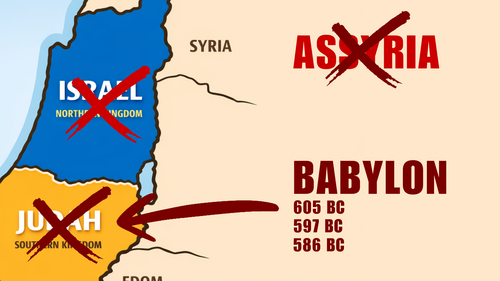
God also tells Habakkuk that the plan he is about to reveal will be hard to believe and that it will come to pass within Habakkuk’s lifetime, so he would actually get to experience it. This sounds like good news! Then God goes on to explain his amazing plan.
Wow, what an amazing plan. So, as you can see, just because God had been silent in answering Habakkuk’s frequent and urgent questions about rising injustice among his people, he was not oblivious to the problem, and he was not without a plan. His plan was absolutely incredible. He was building a brand new army of elite fighting forces who would take down not only other ungodly, unjust nations of the world – including Assyria, the nation who had taken the Northern Kingdom away as prisoners of war – but he would also use this new empire and fighting force to judge Judah, as well.
This solution that God was preparing as a consequence for all the injustice Habakkuk was seeing and experiencing in Judah was far more impressive than he had ever imagined. On one hand, it seemed that God was unconcerned and silent in the face of injustice, but in reality, he was preparing a solution which was far more impressive that we could comprehend.
Have you ever expected one thing, only to receive or experience something far more impressive instead? Maybe you went to a restaurant to celebrate your birthday quietly with a relative only to find out that the entire restaurant had been rented out for a large surprise party with all of your family and friends. Or perhaps a friend gave you a small envelope which you thought had a note inside, only to find out it held a check for $10,000.
This is how it is with God. We ask him our questions and wonder why he doesn’t intervene to resolve the injustices that we see in the world and experience for ourselves. And we envision or perhaps even suggest certain solutions to “help him out.” But if we really understood not only why he was waiting but what he eventually, actually planned to do, we would be completely amazed. While it may seem that God is not doing anything, he is actually planning something that is far more impressive than you could ever comprehend. Can you trust him?
Faith trusts God when injustice seems to prevail.
While we will have more to say in upcoming sermons about how God responds to our questions and to the problem of evil and injustice in the world and in our lives, now is a good time to “peek ahead” at the central verse and truth of this book from Habakkuk.
The just shall live by his faith. (Hab 2:4)
This is the central verse and truth of this entire message from Habakkuk. And though the Bible never mentions or names Habakkuk anywhere else outside of this book, it does quote this statement three times in the NT.
Paul quotes Habakkuk in Galatians 3:11 and also in Romans 1:17, which shows this was a major part of his theology and how he lived out his faith before God. The writer of Hebrews also quotes this verse in Heb 10:39 to encourage God’s people who follow Christ to persevere in their faith no matter what the difficulties are that they may face.
For a person to live by faith in Christ does not mean they cannot or will not pray to God about
the difficult questions they have about life, but it does mean that they will ask their difficult questions and then continue to believe God, both that he has the right to remain silent, and that his plans – whether we know what they are or not – will turn out to be far more impressive than we could ever comprehend.
There is a stage in every child’s early development when curiosity seems endless and “why?” becomes not only their favorite question but their apparent response to almost everything. Why can’t I touch that? Why do I have to go to bed now? Why can’t we do it this way? Why? Why? Why?
A loving parent often tries to answer this question, to explain the reason or the why that they are seeking, but any experienced parent knows that this rarely satisfies the child’s curiosity. Instead, it only causes them to think for a moment about their parent’s explanation only to say again, “But why?”
So, eventually a parent realizes they need to learn when to say, “I can’t explain all of that to you right now, you have to trust me.” This answer doesn’t mean the parent doesn’t care, even though the child may interpret their response that way for the moment. But the child lacks experience, maturity, and vocabulary needed to understand the answers. Children face similar questions and struggle with unsatisfied curiosity in their teenage years, too, only on a higher, more complex level.
The parent sees consequences the child cannot see, dangers the child does not recognize, and outcomes the child cannot imagine. And often, years later, that same child looks back and realizes their parents understood far more than they, as a toddler, could grasp at the time, that what felt like unnecessary restriction or silence was actually wisdom, protection, and love.
As we conclude, Habakkuk reminds us that it is not sinful to ask God hard questions. When injustice seems to increase and God seems silent, Scripture does not tell us to suppress our confusion or pretend everything is okay. Instead, God invites us to bring our struggle, our frustration, and even our fear directly to him in prayer.
“How long?” is not necessarily the language of unbelief. It can often be the words of an honest, sincere, but confused cry of faith that seeks understanding from God. God is not threatened by our questions, and he is not offended when we speak candidly with him about what we see and what we experience in this broken world, whether abroad in world and national headlines or nearby in our local communities, or even within our own church, family, and personal life.
Habakkuk also teaches us that lasting peace, though, does not come primarily from getting answers from God, but from trusting in God because we know that he has the answers. Whether he chooses to explain himself to us or else to remain silent, he is never absent, never indifferent, and never out of control. His timetable extends far beyond our impatience, and his perspective rises far above our limited view.
What feels to us like a delay or forever is often divine patience and purposeful restraint. What appears to be disorder is, in reality, being governed and guided by a sovereign God whose plans are already unfolding according to perfect wisdom. This fact includes not only the injustice that Habakkuk was watching unfold in Judah but the injustice we see all around us today, far away and nearby. What seems to be chaos is actually a world progressing according to God’s sovereign plan. And “will not the Judge of all the Earth do right” (Gen 18:25)? He is and he will.
So, when injustice disturbs your heart and your anxiety grows in the shadow of God’s silence, this is when and where God calls us to move from fear to faith. Not because our questions have all been answered, but because our confidence is anchored in who God is relentless in love and faithful to his people. He sees the full picture, he works on a longer timeline, and his plans to judge injustice and establish righteousness are far more impressive than we could ever imagine. Until that day comes, the just – those who believe and follow Christ – should live by faith, asking honest questions without demanding answers, trusting completely in God’s character, and resting in the certainty that he will make all things right in his perfect time. This is what we do when God seems silent.
- He would choose another rising world empire, this time from East, called the Chaldeans. (Scripture and history also knows them as the Babylonians.)
- They would be an aggressive nation who take over other lands and nations and would be frightening and terrible to anyone who resisted them.
- They would possess elite armies of cavalry with horses superior to other nations’ horses in every way – faster than leopards, fiercer than wolves, and with the focus of an eagle.
- They would come from the East and be like a powerful east wind that gathers prisoners of war like an east wind blows grains of sand.
- They would easily take down every king and emperor who tried to resist them and would destroy every form of defense which tried to prevent them.
Wow, what an amazing plan. So, as you can see, just because God had been silent in answering Habakkuk’s frequent and urgent questions about rising injustice among his people, he was not oblivious to the problem, and he was not without a plan. His plan was absolutely incredible. He was building a brand new army of elite fighting forces who would take down not only other ungodly, unjust nations of the world – including Assyria, the nation who had taken the Northern Kingdom away as prisoners of war – but he would also use this new empire and fighting force to judge Judah, as well.
This solution that God was preparing as a consequence for all the injustice Habakkuk was seeing and experiencing in Judah was far more impressive than he had ever imagined. On one hand, it seemed that God was unconcerned and silent in the face of injustice, but in reality, he was preparing a solution which was far more impressive that we could comprehend.
Have you ever expected one thing, only to receive or experience something far more impressive instead? Maybe you went to a restaurant to celebrate your birthday quietly with a relative only to find out that the entire restaurant had been rented out for a large surprise party with all of your family and friends. Or perhaps a friend gave you a small envelope which you thought had a note inside, only to find out it held a check for $10,000.
This is how it is with God. We ask him our questions and wonder why he doesn’t intervene to resolve the injustices that we see in the world and experience for ourselves. And we envision or perhaps even suggest certain solutions to “help him out.” But if we really understood not only why he was waiting but what he eventually, actually planned to do, we would be completely amazed. While it may seem that God is not doing anything, he is actually planning something that is far more impressive than you could ever comprehend. Can you trust him?
Faith trusts God when injustice seems to prevail.
While we will have more to say in upcoming sermons about how God responds to our questions and to the problem of evil and injustice in the world and in our lives, now is a good time to “peek ahead” at the central verse and truth of this book from Habakkuk.
The just shall live by his faith. (Hab 2:4)
This is the central verse and truth of this entire message from Habakkuk. And though the Bible never mentions or names Habakkuk anywhere else outside of this book, it does quote this statement three times in the NT.
Paul quotes Habakkuk in Galatians 3:11 and also in Romans 1:17, which shows this was a major part of his theology and how he lived out his faith before God. The writer of Hebrews also quotes this verse in Heb 10:39 to encourage God’s people who follow Christ to persevere in their faith no matter what the difficulties are that they may face.
For a person to live by faith in Christ does not mean they cannot or will not pray to God about
the difficult questions they have about life, but it does mean that they will ask their difficult questions and then continue to believe God, both that he has the right to remain silent, and that his plans – whether we know what they are or not – will turn out to be far more impressive than we could ever comprehend.
There is a stage in every child’s early development when curiosity seems endless and “why?” becomes not only their favorite question but their apparent response to almost everything. Why can’t I touch that? Why do I have to go to bed now? Why can’t we do it this way? Why? Why? Why?
A loving parent often tries to answer this question, to explain the reason or the why that they are seeking, but any experienced parent knows that this rarely satisfies the child’s curiosity. Instead, it only causes them to think for a moment about their parent’s explanation only to say again, “But why?”
So, eventually a parent realizes they need to learn when to say, “I can’t explain all of that to you right now, you have to trust me.” This answer doesn’t mean the parent doesn’t care, even though the child may interpret their response that way for the moment. But the child lacks experience, maturity, and vocabulary needed to understand the answers. Children face similar questions and struggle with unsatisfied curiosity in their teenage years, too, only on a higher, more complex level.
The parent sees consequences the child cannot see, dangers the child does not recognize, and outcomes the child cannot imagine. And often, years later, that same child looks back and realizes their parents understood far more than they, as a toddler, could grasp at the time, that what felt like unnecessary restriction or silence was actually wisdom, protection, and love.
As we conclude, Habakkuk reminds us that it is not sinful to ask God hard questions. When injustice seems to increase and God seems silent, Scripture does not tell us to suppress our confusion or pretend everything is okay. Instead, God invites us to bring our struggle, our frustration, and even our fear directly to him in prayer.
“How long?” is not necessarily the language of unbelief. It can often be the words of an honest, sincere, but confused cry of faith that seeks understanding from God. God is not threatened by our questions, and he is not offended when we speak candidly with him about what we see and what we experience in this broken world, whether abroad in world and national headlines or nearby in our local communities, or even within our own church, family, and personal life.
Habakkuk also teaches us that lasting peace, though, does not come primarily from getting answers from God, but from trusting in God because we know that he has the answers. Whether he chooses to explain himself to us or else to remain silent, he is never absent, never indifferent, and never out of control. His timetable extends far beyond our impatience, and his perspective rises far above our limited view.
What feels to us like a delay or forever is often divine patience and purposeful restraint. What appears to be disorder is, in reality, being governed and guided by a sovereign God whose plans are already unfolding according to perfect wisdom. This fact includes not only the injustice that Habakkuk was watching unfold in Judah but the injustice we see all around us today, far away and nearby. What seems to be chaos is actually a world progressing according to God’s sovereign plan. And “will not the Judge of all the Earth do right” (Gen 18:25)? He is and he will.
So, when injustice disturbs your heart and your anxiety grows in the shadow of God’s silence, this is when and where God calls us to move from fear to faith. Not because our questions have all been answered, but because our confidence is anchored in who God is relentless in love and faithful to his people. He sees the full picture, he works on a longer timeline, and his plans to judge injustice and establish righteousness are far more impressive than we could ever imagine. Until that day comes, the just – those who believe and follow Christ – should live by faith, asking honest questions without demanding answers, trusting completely in God’s character, and resting in the certainty that he will make all things right in his perfect time. This is what we do when God seems silent.
Posted in Sermon Manuscript
Posted in Habakkuk, Old Testament, Minor Prophets, Faith, Babylon, Assyria, Judah, Prophecy, Sovereignty, From Fear to Faith, Forever Faithful
Posted in Habakkuk, Old Testament, Minor Prophets, Faith, Babylon, Assyria, Judah, Prophecy, Sovereignty, From Fear to Faith, Forever Faithful
Recent
Archive
2026
February
March
April
May
2025
January
February
March
June
August
2024
January
No Comments