
Wanted: Men of Faith

Acts 16:16-40
Fathers fill an irreplaceable role in family and society. And while fathers are often criticized for their failures, recent studies have revealed an encouraging trend – fathers are spending more time with their children. This is especially true of fathers who are married and have a college education. By spending time, we mean doing things like changing diapers, feeding, talking, reading, playing, helping with homework, attending school meetings, planning activities, and transporting them to and from activities.
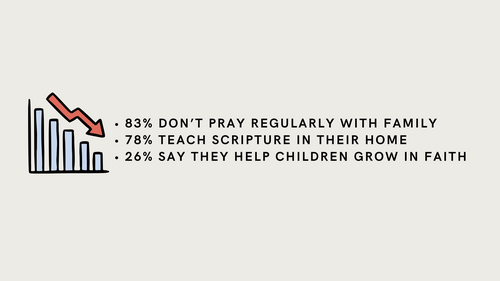
This is an encouraging trend! While we acknowledge this good development, we must also acknowledge another trend, that fathers aren’t providing spiritual leadership for their homes. A study called The State of Biblical Fatherhood indicated the following:
Fathers fill an irreplaceable role in family and society. And while fathers are often criticized for their failures, recent studies have revealed an encouraging trend – fathers are spending more time with their children. This is especially true of fathers who are married and have a college education. By spending time, we mean doing things like changing diapers, feeding, talking, reading, playing, helping with homework, attending school meetings, planning activities, and transporting them to and from activities.
This is an encouraging trend! While we acknowledge this good development, we must also acknowledge another trend, that fathers aren’t providing spiritual leadership for their homes. A study called The State of Biblical Fatherhood indicated the following:
- 83% of Christian fathers don’t pray regularly with their family
- 78% of Christian fathers teach the Scripture to their family at home
- Only 26% of fathers spend intentional time with their children to help them grow in Bible knowledge and spiritual maturity
Pair this with the conclusions of a study by Baptist Press and Promise Keepers:
These studies verify what we already know to be true, that the spiritual influence of a father is very significant in the spiritual development and faith of their children. This means that the spiritual influence and faith of men is a major influence on the spiritual health and faith of not only families but of communities and culture and large. Could it be that our nation has major faith, religious, and spiritual problems because men are not being the spiritual leaders God has called them to be?
Today, we will look at Acts 16 to see the kind of men whose faith makes a difference for God. We will see this kind of man twice, first in the Apostle Paul and second in a prison guard at Philippi. In Paul, we see a man who lived with conviction, spoke and acted for truth, and trusted God even when doing right brought suffering. In the Philippian jailer, we see a man who responded to Christ with faith, identified with Christ through baptism, led his household to Christ, and went on to serve Christ with what he had.
These men show us the kind of men our families, community, and country needs, men whose faith is not passive, private, or sentimental, but active, public, and courageous. Men of faith like this do more than spend time with their children, which is so important, but they influence their families and community for God.
Our community needs men who live with conviction. (Acts 16:16-25)
What is a conviction? It is a firmly held belief about something which is a matter of truth, principle, or morality. And it is more than it a belief, it is a belief that motivates a man deeply enough to act and speak out based upon that conviction, even if it would be unpopular to do so. A biblical example of acting and speaking with conviction would be when three men refused to worship the statue of Nebuchadnezzar even though that meant they would be thrown into a fiery furnace. Some examples from history include:
Men like Daniel’s three friends, Martin Luther, William Wilberforce, Charlie Kirk, and others in our own day remind us that conviction is more than private belief. It is truth held deeply enough that a man is willing to act, speak, and suffer rather than go along with the culture when it goes against God.
In Acts 16, we see the Apostle Paul being a man who lived with conviction. He saw a young girl being misused by some adult men who were making money from her, so he intervened to free her from this abusive business arrangement. As a result, the men who were making money from her reported Paul as a troublemaker. The result was that he was sentenced to be beaten with rods and imprisonment.
Would you have done what Paul did if that was the result? Paul’s conviction was so strong, in fact, that after he had been beaten and imprisoned unfairly and unjustly, he prayed and sang praises to God out loud while he was in prison. This meant that his firm belief and conviction about Jesus Christ continued even during his suffering so that people around him would continue to hear about Jesus.
Paul’s faith was not passive, it was active. His conviction was not private, it was public. His belief in Jesus was not sentimental, it was courageous. And as a result, not only was a young girl freed from abuse, but an entire household was brought to faith in Christ. Let’s take a closer look at what happened because of Paul’s courageous conviction.
Our community needs men who lead with faith. (Acts 16:26-40)
Late at night, after a long hard day of courageous actions for Christ followed by painful suffering for Christ, Paul spending the night in a terribly uncomfortable prison cell, surrounded by other prisoners. As he prayed and sang songs of praise to God out loud, the other prisoners listened. As this was going on, a violent earthquake shook the area so powerfully that the prisoners’ chains broke free and doors of the prison broke open.
It would naturally follow in this situation that the prisoners would take the opportunity to escape from prison. And according to Roman law, if a prisoner ever escaped custody, the prison guard would be executed as a result. This policy ensured that prison guards took their job seriously. And in this case, we might feel sorry for the prison guard because if the prisoner’s had escaped, it certainly wouldn’t have been his fault.
Still, seeing that the prison had become open, the prison guard drew out his sword to commit suicide. He would do this to avoid the embarrassment of a public execution. But before this could happen, Paul called out from within the cell, “Don’t harm yourself, everyone is present and accounted for!”
Thanks to Paul’s outspoken faith in Christ, he had made such an impression on the prisoners that he convinced them to stay in jail. Then as a result, he was able to save the life of the prison guard. But he did more than save this man’s physical life, he saved his spiritual, eternal life, too – so much so that this man, this prison guard, also became a man who would lead with faith.
Who believe on Christ (Acts 16:26-31)
Hearing that no prisoners had escaped, the prison guard grabbed a lantern, ran into the prison cell, and fell on the ground before Paul shaking and trembling from the emotional trauma he had just experienced. Then he said, “Sirs, what must I do to be saved?” What did he mean “to be saved”? He couldn’t have meant to be saved physically because that had already happened. He meant instead to be saved spiritually, to be saved not from physical death but from spiritual, eternal death through separation from God.
Paul answered this question by saying, “Believe on the Lord Jesus Christ, and you will be saved.” This man was Roman citizen, so he was probably trusting in false gods, idols, and the Roman Caesar himself for salvation and the afterlife. But here Paul told him to believe on Jesus Christ, instead. This meant that he would have to turn away from whatever else he was trusting for salvation to trust in Christ alone, instead.
- If a father doesn’t participate in church, even if his wife does, only 1 in 50 children will become a regular worshiper.
- In contrast, if a father does go regularly, regardless of what the mother does, 2/3 and 3/4 of their children will attend church as adults.
These studies verify what we already know to be true, that the spiritual influence of a father is very significant in the spiritual development and faith of their children. This means that the spiritual influence and faith of men is a major influence on the spiritual health and faith of not only families but of communities and culture and large. Could it be that our nation has major faith, religious, and spiritual problems because men are not being the spiritual leaders God has called them to be?
Today, we will look at Acts 16 to see the kind of men whose faith makes a difference for God. We will see this kind of man twice, first in the Apostle Paul and second in a prison guard at Philippi. In Paul, we see a man who lived with conviction, spoke and acted for truth, and trusted God even when doing right brought suffering. In the Philippian jailer, we see a man who responded to Christ with faith, identified with Christ through baptism, led his household to Christ, and went on to serve Christ with what he had.
These men show us the kind of men our families, community, and country needs, men whose faith is not passive, private, or sentimental, but active, public, and courageous. Men of faith like this do more than spend time with their children, which is so important, but they influence their families and community for God.
Our community needs men who live with conviction. (Acts 16:16-25)
What is a conviction? It is a firmly held belief about something which is a matter of truth, principle, or morality. And it is more than it a belief, it is a belief that motivates a man deeply enough to act and speak out based upon that conviction, even if it would be unpopular to do so. A biblical example of acting and speaking with conviction would be when three men refused to worship the statue of Nebuchadnezzar even though that meant they would be thrown into a fiery furnace. Some examples from history include:
- Martin Luther speaking out against the Catholic Church to promote salvation by faith in Christ alone.
- William Tyndale translating the Bible into English even though it meant he would be burned at the stake by the Roman Catholic Church.
- William Wilberforce speaking out against the slave trade in England when slavery was prevalent and the source of wealth for many powerful people.
- Jack Phillips was a baker in Colorado who refused to create immoral designs and messages for customers, despite facing lawsuits and media scrutiny.
- Charlie Kirk was a public speaker who defended and promoted not only important matters like family values and the rights of the unborn but the gospel of Jesus Christ.
Men like Daniel’s three friends, Martin Luther, William Wilberforce, Charlie Kirk, and others in our own day remind us that conviction is more than private belief. It is truth held deeply enough that a man is willing to act, speak, and suffer rather than go along with the culture when it goes against God.
In Acts 16, we see the Apostle Paul being a man who lived with conviction. He saw a young girl being misused by some adult men who were making money from her, so he intervened to free her from this abusive business arrangement. As a result, the men who were making money from her reported Paul as a troublemaker. The result was that he was sentenced to be beaten with rods and imprisonment.
Would you have done what Paul did if that was the result? Paul’s conviction was so strong, in fact, that after he had been beaten and imprisoned unfairly and unjustly, he prayed and sang praises to God out loud while he was in prison. This meant that his firm belief and conviction about Jesus Christ continued even during his suffering so that people around him would continue to hear about Jesus.
Paul’s faith was not passive, it was active. His conviction was not private, it was public. His belief in Jesus was not sentimental, it was courageous. And as a result, not only was a young girl freed from abuse, but an entire household was brought to faith in Christ. Let’s take a closer look at what happened because of Paul’s courageous conviction.
Our community needs men who lead with faith. (Acts 16:26-40)
Late at night, after a long hard day of courageous actions for Christ followed by painful suffering for Christ, Paul spending the night in a terribly uncomfortable prison cell, surrounded by other prisoners. As he prayed and sang songs of praise to God out loud, the other prisoners listened. As this was going on, a violent earthquake shook the area so powerfully that the prisoners’ chains broke free and doors of the prison broke open.
It would naturally follow in this situation that the prisoners would take the opportunity to escape from prison. And according to Roman law, if a prisoner ever escaped custody, the prison guard would be executed as a result. This policy ensured that prison guards took their job seriously. And in this case, we might feel sorry for the prison guard because if the prisoner’s had escaped, it certainly wouldn’t have been his fault.
Still, seeing that the prison had become open, the prison guard drew out his sword to commit suicide. He would do this to avoid the embarrassment of a public execution. But before this could happen, Paul called out from within the cell, “Don’t harm yourself, everyone is present and accounted for!”
Thanks to Paul’s outspoken faith in Christ, he had made such an impression on the prisoners that he convinced them to stay in jail. Then as a result, he was able to save the life of the prison guard. But he did more than save this man’s physical life, he saved his spiritual, eternal life, too – so much so that this man, this prison guard, also became a man who would lead with faith.
Who believe on Christ (Acts 16:26-31)
Hearing that no prisoners had escaped, the prison guard grabbed a lantern, ran into the prison cell, and fell on the ground before Paul shaking and trembling from the emotional trauma he had just experienced. Then he said, “Sirs, what must I do to be saved?” What did he mean “to be saved”? He couldn’t have meant to be saved physically because that had already happened. He meant instead to be saved spiritually, to be saved not from physical death but from spiritual, eternal death through separation from God.
Paul answered this question by saying, “Believe on the Lord Jesus Christ, and you will be saved.” This man was Roman citizen, so he was probably trusting in false gods, idols, and the Roman Caesar himself for salvation and the afterlife. But here Paul told him to believe on Jesus Christ, instead. This meant that he would have to turn away from whatever else he was trusting for salvation to trust in Christ alone, instead.

To believe on Jesus Christ does not mean only to believe that Jesus existed, or that Jesus was a good man, an excellent teacher, or a powerful miracle worker. You can believe all these things about Jesus and still not be saved. You must believe the most important things about who he is. These three things are all present in the name “Lord Jesus Christ.”
Paul explained believing on Jesus Christ for salvation this way (Rom 10:9-13):
If you confess with your mouth the Lord Jesus and believe in your heart that God has raised Him from the dead, you will be saved. For with the heart one believes unto righteousness, and with the mouth confession is made unto salvation. For the Scripture says, “Whoever believes on Him will not be put to shame.” For there is no distinction between Jew and Greek, for the same Lord over all is rich to all who call upon Him. For “whoever calls on the name of the Lord shall be saved.”
It’s important to point out that saving faith, believing on Christ is a personal choice that occurs in your heart and is expressed by your mouth. The prison guard believed on Christ in his heart and expressed that faith with his mouth at the same time. He didn’t perform a variety of rituals or perform various good works, nor did Paul answer his question for how to be saved by giving him a list of things to do. Whoever “calls” on the name of the Lord (acknowledging and trusting in him as Lord, Jesus, Christ) will … be … saved.
Have you believed on the Lord Jesus Christ to be saved? This is not the same question as “were you sprinkled as an infant,” or “did you grow up in a Christian home,” or “did you complete catechism class,” or “do you observe the sacraments,” or “do you go to church”? We need men who have clearly, intentionally, knowingly, personally believed on Christ.
Who are baptized for Christ (Acts 16:33)
We also need men who are baptized for Christ. And what is Christian baptism? The word “baptism” means “to dunk, immerse, or submerge.” And according to Christ and Scripture, it is being immersed by the church in public soon after a person clearly and consciously believes on the Lord Jesus Christ.
Why should a person be baptized? The clear and simple answer is because Christ commanded it. Baptism is the public, visible way that we publicly identify ourselves with Christ and are joined to the church. It is the first step we must take to show that we do indeed believe on Christ as Lord by obeying his command. When a person who claims to believe on Christ will not receive baptism, they raise a serious question about whether they have genuinely believed on Christ at all.
Here is what Jesus said about baptism:
Jesus came and spoke to them, saying, “All authority has been given to Me in heaven and on earth. Go therefore and make disciples of all the nations, baptizing them in the name of the Father and of the Son and of the Holy Spirit, teaching them to observe all things that I have commanded you; and lo, I am with you always, even to the end of the age.” (Mt 28:18-20)
As you can see, he places baptism first, making it the first outward step of following him. Then everything else he commands should come after that. Then, as the church began in the earliest days, that is exactly what happened.
Then those who gladly received his word were baptized; and that day about three thousand souls were added to them. (Acts 2:41)
People who heard the word about the Lord Jesus Christ for salvation believed, then they received baptism soon afterwards, publicly identifying themselves as followers of Christ. Inward, heart belief in Christ is what brings salvation. Outward, visible baptism by immersion soon after is what brings public acceptance of your faith by the church.
My father grew up in church, was sprinkled as an infant, graduated from catechism class as a kid, and did a lot of things in the church as a teenager. But not until he was 17 years old when he heard a preacher explain what it meant to believe on the Lord Jesus Christ did he clearly, intentionally, knowingly, personally believe on Jesus to save him.
Soon after, he realized his need to be baptized. He realized that bring sprinkled as an infant wasn’t baptism because it wasn’t immersion and it didn’t occur after he consciously, personally believed on Christ. So, he received baptism to take his first meaningful step of obedience to Christ, showing that he did indeed believe on Jesus as Lord.
That’s what this prison guard did in Philippi. He believed on Christ, then he was baptized. In these ways, he was a man who led with faith. But he led with faith in more ways, too.
Who bring their household to Christ (Acts 16:32-33)
Not only did this man believe on Christ and receive baptism soon after, but he also introduced his family to Christ. As you can see in Acts 16:32-33, the man invited Paul to “speak the word of the Lord … to all who were in his house.” Yes, this would include his immediate family members (spouse and children), as we would view a household today. But “household” meant more than this. It included people like parents and household servants and employees, too, anyone who relied on him for their care.
This means that he gave the people who lived under his care the opportunity to believe on Christ for themselves, and in this case, everyone who heard the word also believed on the Lord Jesus Christ as he had also done. This isn’t always the result, for some men who believe on Christ will wives and children, etc. who refuse to believe on Christ. But regardless, a man of faith should do what he can to give all who are in his house an opportunity to believe on Christ.
- Lord emphasizes his complete authority and deity. You must submit to him as your master and acknowledge him as completely God.
- Jesus emphasizes his mission and humanity. You must depend on him as your Savior and acknowledge him as completely human, a man who took your place at the cross.
- Christ emphasizes his role as God’s promised Messiah. He is God’s anointed one, so you must believe on him as the one and only way that God has provided to save you from sin, death, and hell and to bring you into God’s family and kingdom forever.
Paul explained believing on Jesus Christ for salvation this way (Rom 10:9-13):
If you confess with your mouth the Lord Jesus and believe in your heart that God has raised Him from the dead, you will be saved. For with the heart one believes unto righteousness, and with the mouth confession is made unto salvation. For the Scripture says, “Whoever believes on Him will not be put to shame.” For there is no distinction between Jew and Greek, for the same Lord over all is rich to all who call upon Him. For “whoever calls on the name of the Lord shall be saved.”
It’s important to point out that saving faith, believing on Christ is a personal choice that occurs in your heart and is expressed by your mouth. The prison guard believed on Christ in his heart and expressed that faith with his mouth at the same time. He didn’t perform a variety of rituals or perform various good works, nor did Paul answer his question for how to be saved by giving him a list of things to do. Whoever “calls” on the name of the Lord (acknowledging and trusting in him as Lord, Jesus, Christ) will … be … saved.
Have you believed on the Lord Jesus Christ to be saved? This is not the same question as “were you sprinkled as an infant,” or “did you grow up in a Christian home,” or “did you complete catechism class,” or “do you observe the sacraments,” or “do you go to church”? We need men who have clearly, intentionally, knowingly, personally believed on Christ.
Who are baptized for Christ (Acts 16:33)
We also need men who are baptized for Christ. And what is Christian baptism? The word “baptism” means “to dunk, immerse, or submerge.” And according to Christ and Scripture, it is being immersed by the church in public soon after a person clearly and consciously believes on the Lord Jesus Christ.
Why should a person be baptized? The clear and simple answer is because Christ commanded it. Baptism is the public, visible way that we publicly identify ourselves with Christ and are joined to the church. It is the first step we must take to show that we do indeed believe on Christ as Lord by obeying his command. When a person who claims to believe on Christ will not receive baptism, they raise a serious question about whether they have genuinely believed on Christ at all.
Here is what Jesus said about baptism:
Jesus came and spoke to them, saying, “All authority has been given to Me in heaven and on earth. Go therefore and make disciples of all the nations, baptizing them in the name of the Father and of the Son and of the Holy Spirit, teaching them to observe all things that I have commanded you; and lo, I am with you always, even to the end of the age.” (Mt 28:18-20)
As you can see, he places baptism first, making it the first outward step of following him. Then everything else he commands should come after that. Then, as the church began in the earliest days, that is exactly what happened.
Then those who gladly received his word were baptized; and that day about three thousand souls were added to them. (Acts 2:41)
People who heard the word about the Lord Jesus Christ for salvation believed, then they received baptism soon afterwards, publicly identifying themselves as followers of Christ. Inward, heart belief in Christ is what brings salvation. Outward, visible baptism by immersion soon after is what brings public acceptance of your faith by the church.
My father grew up in church, was sprinkled as an infant, graduated from catechism class as a kid, and did a lot of things in the church as a teenager. But not until he was 17 years old when he heard a preacher explain what it meant to believe on the Lord Jesus Christ did he clearly, intentionally, knowingly, personally believe on Jesus to save him.
Soon after, he realized his need to be baptized. He realized that bring sprinkled as an infant wasn’t baptism because it wasn’t immersion and it didn’t occur after he consciously, personally believed on Christ. So, he received baptism to take his first meaningful step of obedience to Christ, showing that he did indeed believe on Jesus as Lord.
That’s what this prison guard did in Philippi. He believed on Christ, then he was baptized. In these ways, he was a man who led with faith. But he led with faith in more ways, too.
Who bring their household to Christ (Acts 16:32-33)
Not only did this man believe on Christ and receive baptism soon after, but he also introduced his family to Christ. As you can see in Acts 16:32-33, the man invited Paul to “speak the word of the Lord … to all who were in his house.” Yes, this would include his immediate family members (spouse and children), as we would view a household today. But “household” meant more than this. It included people like parents and household servants and employees, too, anyone who relied on him for their care.
This means that he gave the people who lived under his care the opportunity to believe on Christ for themselves, and in this case, everyone who heard the word also believed on the Lord Jesus Christ as he had also done. This isn’t always the result, for some men who believe on Christ will wives and children, etc. who refuse to believe on Christ. But regardless, a man of faith should do what he can to give all who are in his house an opportunity to believe on Christ.
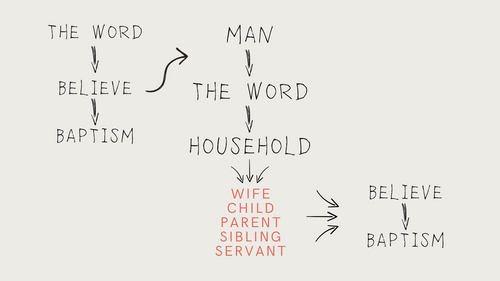
It’s crucial to point out here that just because this man believed on Christ does not mean everyone else in his household was automatically saved by default. Nor does it mean that any infants in his household believed or were saved. Though the passage doesn’t say there were any infants in his home, it does say that whoever was in his home had heard the message about Christ first and believed as a result. Infants can’t do this because they don’t have the ability to understand language and make conscious choices about faith.
A recent survey has concluded that if a child is the first person in a household to become a Christian, there is a 3.5% chance that everyone else in the household will follow. If a mother is the first to believe, there is a 17% chance that everyone in the household will believe. But if the father is the first to believe, there is a 93% chance everyone else in the household will follow. This shows how influential a husband and father’s faith can be.
Our community, nation, and world need more men who not only take care of their families and spend time with their families – we need men who will lead their families in faith in Christ. We need men who personally believe on Christ Jesus as Lord, who have obeyed Christ first through baptism, and who also do what they can to intentionally lead and guide the people who are under their care to their own faith in Christ, as well.
This prison guard shows us one more way that men should lead their households in faith.
Who get involved with serving Christ (Acts 16:34-40)
If you look closely at Act 16:34-40, this man involved himself immediately in supporting the cause of Christ. He welcomed Paul into his house, fed him, bandaged his wounds, and gave him a place to sleep. He offered him generous hospitality.
He also served as a go-between and messenger between local government officials and Paul, letting Paul know that his sentence had been officially revoked and then conveying a message from Paul back to the government officials, as well.
In other words, this man didn’t just receive salvation and move on with his life. He received salvation then involved his energy and resources in supporting gospel work. He was not just a recipient but a participant. He opened his home and contributed his resources to gospel ministry. He became a follower of Christ and a supporter of the church.
The faith of fathers can determine the faith of a family, a household, a community, and a nation. It may be said that the faith of our nation and our community is weak because we need more men to be leaders of faith in their homes.
We need men who live with conviction, as Paul did when he acted and spoke for truth even though it brought suffering to his life. Second, we need men who lead with faith, as the Philippian prison guard did after he believed on the Lord Jesus Christ. This kind of man believes on Christ personally, is baptized for Christ publicly, brings his household to Christ intentionally, and gets involved with serving Christ faithfully.
Bill McCartney was the founder of the well-known men’s ministry called “Promise Keepers.” He was also a former head football coach for the University of Colorado Boulder. He once said that “a real man, a man’s man, is a godly man.” And this is what we need today. Will you take the next step towards being that kind of man today, like Paul and like the prison guard at Philippi?
A recent survey has concluded that if a child is the first person in a household to become a Christian, there is a 3.5% chance that everyone else in the household will follow. If a mother is the first to believe, there is a 17% chance that everyone in the household will believe. But if the father is the first to believe, there is a 93% chance everyone else in the household will follow. This shows how influential a husband and father’s faith can be.
Our community, nation, and world need more men who not only take care of their families and spend time with their families – we need men who will lead their families in faith in Christ. We need men who personally believe on Christ Jesus as Lord, who have obeyed Christ first through baptism, and who also do what they can to intentionally lead and guide the people who are under their care to their own faith in Christ, as well.
This prison guard shows us one more way that men should lead their households in faith.
Who get involved with serving Christ (Acts 16:34-40)
If you look closely at Act 16:34-40, this man involved himself immediately in supporting the cause of Christ. He welcomed Paul into his house, fed him, bandaged his wounds, and gave him a place to sleep. He offered him generous hospitality.
He also served as a go-between and messenger between local government officials and Paul, letting Paul know that his sentence had been officially revoked and then conveying a message from Paul back to the government officials, as well.
In other words, this man didn’t just receive salvation and move on with his life. He received salvation then involved his energy and resources in supporting gospel work. He was not just a recipient but a participant. He opened his home and contributed his resources to gospel ministry. He became a follower of Christ and a supporter of the church.
The faith of fathers can determine the faith of a family, a household, a community, and a nation. It may be said that the faith of our nation and our community is weak because we need more men to be leaders of faith in their homes.
We need men who live with conviction, as Paul did when he acted and spoke for truth even though it brought suffering to his life. Second, we need men who lead with faith, as the Philippian prison guard did after he believed on the Lord Jesus Christ. This kind of man believes on Christ personally, is baptized for Christ publicly, brings his household to Christ intentionally, and gets involved with serving Christ faithfully.
Bill McCartney was the founder of the well-known men’s ministry called “Promise Keepers.” He was also a former head football coach for the University of Colorado Boulder. He once said that “a real man, a man’s man, is a godly man.” And this is what we need today. Will you take the next step towards being that kind of man today, like Paul and like the prison guard at Philippi?

Together, Paul and the jailer show us that men of faith do not keep their faith passive or private, but live it our actively, publicly, and courageously for the good of their families, church, community, and nation. Are you a man who needs to believe on Christ? Are you a man who needs to be baptized for Christ? Are you a man who needs to lead his family to Christ? Are you a man who needs to get involved in serving Christ?
Are you a man who needs to live out your faith publicly with conviction? If so, please speak with a pastor, a deacon, or a man you know from our church about what God is calling you to be and to do today and we will look forward to helping you take your next steps in following Christ. Be bold, be courageous, be intentional and God will bless your faith in a mighty way I promise. And your faith will not only affect your own life, but the lives of those in your household, your community, and your nation.
Are you a man who needs to live out your faith publicly with conviction? If so, please speak with a pastor, a deacon, or a man you know from our church about what God is calling you to be and to do today and we will look forward to helping you take your next steps in following Christ. Be bold, be courageous, be intentional and God will bless your faith in a mighty way I promise. And your faith will not only affect your own life, but the lives of those in your household, your community, and your nation.
Posted in Sermon Manuscript
Posted in Evangelism, Gospel, Family, Faith, Fathers Day, Fatherdhood, Manhood, Leadership
Posted in Evangelism, Gospel, Family, Faith, Fathers Day, Fatherdhood, Manhood, Leadership
Recent
Archive
2026
February
March
April
May
2025
January
February
March
June
August
2024
January
No Comments