
The Certainty of Scripture
Proverbs 30:5-6
Last week, we learned from Prov 30:1-4 that true wisdom begins when we humbly admit how little we know before God. Agur introduced this chapter of wisdom in Proverbs not by describing himself as a knowledgeable person worth listening to, as how a book author promotes his credentials on the back cover of his book, but by doing the opposite. He confesses his limitations in both a shocking and unimpressive way by saying he knew less than any other person and was, in fact, as knowledgeable as an animal.
When we consider the vastness of creation, from the smallest details under a microscope to the immeasurable expanse of the universe seen through a telescope, we see that human knowledge is incredibly small compared to God’s infinite knowledge and wisdom. When compared to the wisdom of God, it is as though we know nothing at all.
Oh, the depth of the riches both of the wisdom and knowledge of God! How unsearchable are His judgments and His ways past finding out! (Rom 11:33)
Agur also showed us that a truly wise person not only acknowledges that he knows nothing before God, but he lets his great limitations turn him to faith and trust in Jesus Christ, the Son of God, who is the wisdom of God. When we trust in Jesus and submit completely to him as God and Savior, we know the One who knows all things.
We’re probably curious to hear whatever Agur has to say next, right? What kind of wisdom will he share with us in the next twenty-nine verses? The first thing he says follows immediately and of necessity from these opening thoughts. Since we know nothing and God knows everything, a wise person will choose to trust in God’s Word.
God’s Word is reliable.
Leading influencers in United States history recognized this. Signers of our Constitution and the Bill of Rights recognized this.
John Adams said, “The Bible contains the most profound philosophy, the most perfect morality, and the most refined policy that ever was conceived upon earth.” James Madison said, “The Holy Scriptures are the best guide for moral instruction.” And George Washington said, “It is impossible to rightly govern the world without God and the Bible.”
If you’re going to trust in something, you need to know it’s reliable. That’s why you research vehicle ratings before buying a car, check restaurant reviews before you go out to eat, or verify the credentials of a doctor before choosing them as your physician. So, what about God’s Word, the Bible? Is it just a collection of myths and religious fairy tales? Or is it reliable and true? Agur says, “Every word of God is pure.”
To understand this statement, we must first know what each word means. “Word” refers to individual words and to groups of words, we call statements. “Of God” restricts this statement to words and statements that come from God, but then “every” broadens this statement to include every word or statement that God has spoken, not just some of them.
Finally, this statement claims that everything that God has ever said is “pure.” This word means “purified” as in “smelted” or “refined.” It speaks of the process by which a metal worker removes elements from metal by heating it at increasingly higher temperatures. The result of this process is a metal that consists of only one element or substance. No matter how hot or how many times you heat it, no more impurities will rise to the surface.
By saying this, Agur is saying something very helpful, though at first it may seem unnecessary. First, it may seem unnecessary since he has already explained that God is all knowing and all wise. If he is all knowing and all wise, why would we question the value or reliability of what he says? Unfortunately, we are sinful people who not only question what God says but that God exists at all.
To counter this problem, Agur points out that God’s Word has never been wrong. It has a perfect, 5-star record, a clean history, and has never once been wrong. First, this is true from a historical standpoint. There are many examples of people and places mentioned in Scripture with no external evidence to support their existence. Yet, time after time, archeologists have unearthed evidence that verifies what the Bible has said for centuries.
Many other examples like this could be given. My favorite, though, is the testimony of Sir William Ramsey, an accomplished archaeologist and historian at the turn of the 20th century. He began his career as a skeptic who adamantly believed the book of Acts was historically false. To prove his theory, he spent decades traveling Asia Minor (Turkey), excavating ancient cities, studying inscriptions, retracing Paul’s missionary routes.
Instead of finding errors, though, he repeatedly discovered that Luke’s geographical details, political titles, cultural descriptions, and historical references were accurate and precise, and he could find no exceptions. As a result, his research led him to conclude that not only was Luke “a historian of the first rank” but that Acts was a completely reliable book. Over time, the total archaeological evidence convinced him not only to accept the historical accuracy of Acts but to believe on Christ as his God and Savior.
But God’s Word is not only reliable in a factual, historical sense in that it is correct and true and never inaccurate or wrong. It is also reliable in a personal, practical sense, in that whenever we apply what God says to our lives and rely on it in the choices we make, it always proves to be true in this way, too. That’s what Agur means when he says, “He is a shield to those who put their trust in him.”
A “shield” is what you probably have in mind, a defensive piece of armor to protect a person from danger. We’re familiar with ancient shields, the kind Roman soldiers, Viking warriors, and medieval knights used, but we should also be familiar with and thankful for shields today, as well.
The vehicles we drive, for instance, have heat shields in various places to protect passengers and other parts of the car from the extreme heat the engine and other parts produce. Our vehicles also have windshields to protect us from oncoming wind, weather, and objects as we drive down the road at high speeds.
But even those shields aren’t completely reliable. We buy insurance for windshields because they get chipped, cracked, and even smashed. Heat shields get damaged, get loose and rattle, even fall off. And when heat shields fail, the vehicle can perform poorly and in worst case scenarios are at risk of fire.
So, how does this apply to the Word of God, the things that God has said? Unlike the other shields that humans design and use, God’s Word never fails. His promises always come to pass and the truth he speaks always proves to be true.
The last verse of this chapter is a clear example of how what God says is reliable. It says:
“For as the churning of milk produces butter, and wringing the nose produces blood, so the forcing of wrath produces strife” (Prov 30:33)
Three times this statement uses the word for “to twist” but we translate it as “to churn,” then “to wring,” then “to stir up.” If you twist an animal skin bag filled with milk you get butter, if you twist a person’s nose, you get blood, and if you twist or aggravate a person who is already angry, you will probably get punched in the nose or something similar. This is an example of reliable truth from God’s Word.
But just as simple truths like this are reliable, so are the more difficult truths, as well. Consider what Paul says in Philippians 4:12-13:
I know how to be abased, and I know how to abound. Everywhere and in all things I have learned both to be full and to be hungry, both to abound and to suffer need. I can do all things through Christ who strengthens me.
Here, God guarantees that whether you face financial needs or enjoy financial abundance, he gives wisdom and strength through Christ to respond well to your situation without being ruined, one way or the other. Do you believe this?
Anyone who has trusted in this promise and applied it faithfully to their life situation has never been disappointed by God. The key is to know what God says, to understand what God says, then to put your trust in what he says by doing what he says to do and relying on him to do what he said he would do, as well. Listen to how Paul explains this:
All Scripture is given by inspiration of God, and is profitable for doctrine, for reproof, for correction, for instruction in righteousness. (2 Tim 3:16)
“All Scripture” refers to everything that the sixty-six books of the Bible say. Theologians call this “verbal, plenary inspiration,” but it simply means that everything the Bible says is what God himself has to say, down to both every word and every statement. There are not parts of the Bible which are true and others which are not. It is all true and from God.
As a result, the whole Bible is helpful and useful for four things: doctrine, reproof, correction, and instruction in righteousness. “Doctrine” is knowing what is right. “Reproof” is knowing what is wrong. “Correction” is knowing how to fix what is wrong. And “Instruction in righteousness” is how to keep things right.
Friends, in God’s Word we have a perfectly reliable message from God himself, the One who is perfectly knowledgeable, understanding, and wise. It has a perfect and reliable track record and always proves to be true when we trust what it says in our lives. Do we treat it this way?
Patrick Henry, a signer of our Constitution, said, “I have trusted God, and I have never been disappointed.” John Jay said, “The Scriptures assure us that those who trust in God shall not be confounded.” Isaac Backus, a Baptist pastor in early colonial America said, “The Lord never disappoints the soul that rests upon His Word.”
This Book of the Law shall not depart from your mouth, but you shall meditate in it day and night, that you may observe to do according to all that is written in it. For then you will make your way prosperous, and then you will have good success. (Joshua 1:8-9)
You may know that this is the Scripture verse I put in birthday cards. I do this because it reminds us of how important and reliable God’s Word is to our every day lives. But God’s Word is not just perfectly reliable, in fact and in practice …
God’s Word is sufficient.
The word “sufficient” means “to be enough.” It describes a meal that leaves you full, an experience or relationship that makes you satisfied, and the amount of money it takes to purchase something. If a meal is not sufficient, you may look for more food somewhere else. If an experience or relationship leaves you dissatisfied, you may look for another experience or relationship that’s better. If you don’t have enough money to purchase something, you may need to get money from someone else or take out a loan.
But God’s wisdom in God’s Word is not this way. That’s why Agur says, “Do not add to His words, lest He rebuke you, and you be found a liar.” To say “do not add to His words” means there is never a need to add anything to what God says because what God says is good enough – it is sufficient, it is all that you need.
Both the Old and New Testaments make similar claims about God’s Word elsewhere:
Whatever I command you, be careful to observe it; you shall not add to it nor take away from it. (Deut 12:32)
… if anyone adds to these things, God will add to him the plagues that are written in this book; and if anyone takes away from the words of the book of this prophecy, God shall take away his part from the Book of Life … (Rev 22:18)
There is a sense in which Dt 12:32, Prov 30:6, and Rev 22:18 function like a warning that appears at the beginning, middle, and end of the Bible. It is a warning not to make changes to what God has said.
These warnings do not mean if you recite a Bible verse and mistakenly add or forget a word that you’ll be in trouble with God. It also doesn’t mean if you are typing out a Bible verse and make a typo that you’ll be judged by God. I think you know this already.
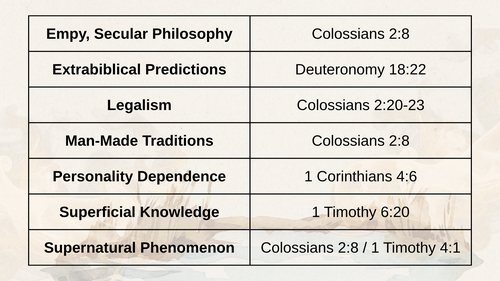
These warnings are not about inadvertent memory or typo errors; they’re about deliberately altering what God has said by either disregarding or deleting something he has said or else adding or treating as equally important something else outside of what God has said. In Prov 30:6, Agur focuses exclusively on adding to God’s Word. How can we do this? I can think of at least seven ways:
Last week, we learned from Prov 30:1-4 that true wisdom begins when we humbly admit how little we know before God. Agur introduced this chapter of wisdom in Proverbs not by describing himself as a knowledgeable person worth listening to, as how a book author promotes his credentials on the back cover of his book, but by doing the opposite. He confesses his limitations in both a shocking and unimpressive way by saying he knew less than any other person and was, in fact, as knowledgeable as an animal.
When we consider the vastness of creation, from the smallest details under a microscope to the immeasurable expanse of the universe seen through a telescope, we see that human knowledge is incredibly small compared to God’s infinite knowledge and wisdom. When compared to the wisdom of God, it is as though we know nothing at all.
Oh, the depth of the riches both of the wisdom and knowledge of God! How unsearchable are His judgments and His ways past finding out! (Rom 11:33)
Agur also showed us that a truly wise person not only acknowledges that he knows nothing before God, but he lets his great limitations turn him to faith and trust in Jesus Christ, the Son of God, who is the wisdom of God. When we trust in Jesus and submit completely to him as God and Savior, we know the One who knows all things.
We’re probably curious to hear whatever Agur has to say next, right? What kind of wisdom will he share with us in the next twenty-nine verses? The first thing he says follows immediately and of necessity from these opening thoughts. Since we know nothing and God knows everything, a wise person will choose to trust in God’s Word.
God’s Word is reliable.
Leading influencers in United States history recognized this. Signers of our Constitution and the Bill of Rights recognized this.
John Adams said, “The Bible contains the most profound philosophy, the most perfect morality, and the most refined policy that ever was conceived upon earth.” James Madison said, “The Holy Scriptures are the best guide for moral instruction.” And George Washington said, “It is impossible to rightly govern the world without God and the Bible.”
If you’re going to trust in something, you need to know it’s reliable. That’s why you research vehicle ratings before buying a car, check restaurant reviews before you go out to eat, or verify the credentials of a doctor before choosing them as your physician. So, what about God’s Word, the Bible? Is it just a collection of myths and religious fairy tales? Or is it reliable and true? Agur says, “Every word of God is pure.”
To understand this statement, we must first know what each word means. “Word” refers to individual words and to groups of words, we call statements. “Of God” restricts this statement to words and statements that come from God, but then “every” broadens this statement to include every word or statement that God has spoken, not just some of them.
Finally, this statement claims that everything that God has ever said is “pure.” This word means “purified” as in “smelted” or “refined.” It speaks of the process by which a metal worker removes elements from metal by heating it at increasingly higher temperatures. The result of this process is a metal that consists of only one element or substance. No matter how hot or how many times you heat it, no more impurities will rise to the surface.
By saying this, Agur is saying something very helpful, though at first it may seem unnecessary. First, it may seem unnecessary since he has already explained that God is all knowing and all wise. If he is all knowing and all wise, why would we question the value or reliability of what he says? Unfortunately, we are sinful people who not only question what God says but that God exists at all.
To counter this problem, Agur points out that God’s Word has never been wrong. It has a perfect, 5-star record, a clean history, and has never once been wrong. First, this is true from a historical standpoint. There are many examples of people and places mentioned in Scripture with no external evidence to support their existence. Yet, time after time, archeologists have unearthed evidence that verifies what the Bible has said for centuries.
- Historians used to believe the Hittite Empire was fictional, but now there are thousands of inscriptions and ruins in Turkey which prove its existence.
- Historians doubted Jericho’s miraculous destruction, but excavations have revealed walls that collapsed outward and remnants of a burnt city, as Joshua 6 describes.
- Pontius Pilate was once viewed as a fictitious person until a stone inscription unearthed in Caesarea confirmed his existence and title, just as Lk 3:1 describes.
Many other examples like this could be given. My favorite, though, is the testimony of Sir William Ramsey, an accomplished archaeologist and historian at the turn of the 20th century. He began his career as a skeptic who adamantly believed the book of Acts was historically false. To prove his theory, he spent decades traveling Asia Minor (Turkey), excavating ancient cities, studying inscriptions, retracing Paul’s missionary routes.
Instead of finding errors, though, he repeatedly discovered that Luke’s geographical details, political titles, cultural descriptions, and historical references were accurate and precise, and he could find no exceptions. As a result, his research led him to conclude that not only was Luke “a historian of the first rank” but that Acts was a completely reliable book. Over time, the total archaeological evidence convinced him not only to accept the historical accuracy of Acts but to believe on Christ as his God and Savior.
But God’s Word is not only reliable in a factual, historical sense in that it is correct and true and never inaccurate or wrong. It is also reliable in a personal, practical sense, in that whenever we apply what God says to our lives and rely on it in the choices we make, it always proves to be true in this way, too. That’s what Agur means when he says, “He is a shield to those who put their trust in him.”
A “shield” is what you probably have in mind, a defensive piece of armor to protect a person from danger. We’re familiar with ancient shields, the kind Roman soldiers, Viking warriors, and medieval knights used, but we should also be familiar with and thankful for shields today, as well.
The vehicles we drive, for instance, have heat shields in various places to protect passengers and other parts of the car from the extreme heat the engine and other parts produce. Our vehicles also have windshields to protect us from oncoming wind, weather, and objects as we drive down the road at high speeds.
But even those shields aren’t completely reliable. We buy insurance for windshields because they get chipped, cracked, and even smashed. Heat shields get damaged, get loose and rattle, even fall off. And when heat shields fail, the vehicle can perform poorly and in worst case scenarios are at risk of fire.
So, how does this apply to the Word of God, the things that God has said? Unlike the other shields that humans design and use, God’s Word never fails. His promises always come to pass and the truth he speaks always proves to be true.
The last verse of this chapter is a clear example of how what God says is reliable. It says:
“For as the churning of milk produces butter, and wringing the nose produces blood, so the forcing of wrath produces strife” (Prov 30:33)
Three times this statement uses the word for “to twist” but we translate it as “to churn,” then “to wring,” then “to stir up.” If you twist an animal skin bag filled with milk you get butter, if you twist a person’s nose, you get blood, and if you twist or aggravate a person who is already angry, you will probably get punched in the nose or something similar. This is an example of reliable truth from God’s Word.
But just as simple truths like this are reliable, so are the more difficult truths, as well. Consider what Paul says in Philippians 4:12-13:
I know how to be abased, and I know how to abound. Everywhere and in all things I have learned both to be full and to be hungry, both to abound and to suffer need. I can do all things through Christ who strengthens me.
Here, God guarantees that whether you face financial needs or enjoy financial abundance, he gives wisdom and strength through Christ to respond well to your situation without being ruined, one way or the other. Do you believe this?
Anyone who has trusted in this promise and applied it faithfully to their life situation has never been disappointed by God. The key is to know what God says, to understand what God says, then to put your trust in what he says by doing what he says to do and relying on him to do what he said he would do, as well. Listen to how Paul explains this:
All Scripture is given by inspiration of God, and is profitable for doctrine, for reproof, for correction, for instruction in righteousness. (2 Tim 3:16)
“All Scripture” refers to everything that the sixty-six books of the Bible say. Theologians call this “verbal, plenary inspiration,” but it simply means that everything the Bible says is what God himself has to say, down to both every word and every statement. There are not parts of the Bible which are true and others which are not. It is all true and from God.
As a result, the whole Bible is helpful and useful for four things: doctrine, reproof, correction, and instruction in righteousness. “Doctrine” is knowing what is right. “Reproof” is knowing what is wrong. “Correction” is knowing how to fix what is wrong. And “Instruction in righteousness” is how to keep things right.
Friends, in God’s Word we have a perfectly reliable message from God himself, the One who is perfectly knowledgeable, understanding, and wise. It has a perfect and reliable track record and always proves to be true when we trust what it says in our lives. Do we treat it this way?
Patrick Henry, a signer of our Constitution, said, “I have trusted God, and I have never been disappointed.” John Jay said, “The Scriptures assure us that those who trust in God shall not be confounded.” Isaac Backus, a Baptist pastor in early colonial America said, “The Lord never disappoints the soul that rests upon His Word.”
This Book of the Law shall not depart from your mouth, but you shall meditate in it day and night, that you may observe to do according to all that is written in it. For then you will make your way prosperous, and then you will have good success. (Joshua 1:8-9)
You may know that this is the Scripture verse I put in birthday cards. I do this because it reminds us of how important and reliable God’s Word is to our every day lives. But God’s Word is not just perfectly reliable, in fact and in practice …
God’s Word is sufficient.
The word “sufficient” means “to be enough.” It describes a meal that leaves you full, an experience or relationship that makes you satisfied, and the amount of money it takes to purchase something. If a meal is not sufficient, you may look for more food somewhere else. If an experience or relationship leaves you dissatisfied, you may look for another experience or relationship that’s better. If you don’t have enough money to purchase something, you may need to get money from someone else or take out a loan.
But God’s wisdom in God’s Word is not this way. That’s why Agur says, “Do not add to His words, lest He rebuke you, and you be found a liar.” To say “do not add to His words” means there is never a need to add anything to what God says because what God says is good enough – it is sufficient, it is all that you need.
Both the Old and New Testaments make similar claims about God’s Word elsewhere:
Whatever I command you, be careful to observe it; you shall not add to it nor take away from it. (Deut 12:32)
… if anyone adds to these things, God will add to him the plagues that are written in this book; and if anyone takes away from the words of the book of this prophecy, God shall take away his part from the Book of Life … (Rev 22:18)
There is a sense in which Dt 12:32, Prov 30:6, and Rev 22:18 function like a warning that appears at the beginning, middle, and end of the Bible. It is a warning not to make changes to what God has said.
These warnings do not mean if you recite a Bible verse and mistakenly add or forget a word that you’ll be in trouble with God. It also doesn’t mean if you are typing out a Bible verse and make a typo that you’ll be judged by God. I think you know this already.
These warnings are not about inadvertent memory or typo errors; they’re about deliberately altering what God has said by either disregarding or deleting something he has said or else adding or treating as equally important something else outside of what God has said. In Prov 30:6, Agur focuses exclusively on adding to God’s Word. How can we do this? I can think of at least seven ways:
- Empty, Secular Philosophy (Col 2:8) – here Paul warns against being “spoiled” through “philosophy and empty deceptions.”
- Extrabiblical Predictions (Dt 18:22) – here Moses warns against believing or making predictions about the future which God himself has not made.
- Legalism (Col 2:20-23) – here Paul warns against enforcing additional commands and rules which are not already clearly taught in Scripture.
- Man-Made Traditions (Col 2:8) – here Paul also warns against popular, repeated teachings and rituals which are not taught by Scripture.
- Personality Dependence (1 Cor 4:6) – here Paul warns against “going beyond what is written” in Scripture, treating whatever a person says as though it is equal to Scripture.
- Superficial Knowledge (1 Tim 6:20) – here Paul warns against following advice from people who claim to be experts but are not rooted in Scripture (“so called knowledge”).
- Supernatural Phenomenon (Col 2:18; 1 Tim 4:1) – here Paul warns against knowledge that comes from supernatural sources, like angels and demons.
Podcasts. YouTube channels. Talk shows. Newscasters. Popular preachers. Politicians. Social media influencers. New York Times best sellers. Pop musicians. Spiritual gurus. University professors. Psychologists and psychiatrists. Neighbors, classmates, friends. We have so many sources and voices of info to choose.
This wisdom does not descend from above, but is earthly, sensual, demonic … but the wisdom that is from above is first pure ... (Jam 2:15-17)
If we’re not careful, we add to what God says by internalizing and living out ideas, mantras, and wisdom that doesn’t come from him. When we do this, Agur warns that we will eventually be corrected and discover that we have either lied or been deceived. “Lest he rebuke you, and you be found a liar.”
Thankfully, we don’t need all these additional sources of knowledge to learn and live a life of faith with God.
His divine power has given to us all things that pertain to life and godliness, through the knowledge of Him who called us by glory and virtue, by which have been given to us exceedingly great and precious promises, that through these you may be partakers of the divine nature, having escaped the corruption that is in the world through lust. (2 Pt 1:4)
How would you describe your approach to God’s Word today? Do you treat it as the source of all knowledge and wisdom from God, reading and reflecting on it daily and applying it intentionally and rigorously to your choices and life? Or do you consider and consult it rarely, relying on all sorts of other sources of information, treating God’s Word as though it is not sufficient for life and godliness?
What sources of information do are “adding” to your view of God and life in a way that undermines the sufficiency of God’s Word in your life? What if treated God’s Word like we treat our cell phones?
Makes you think about your priorities, right? Unlike the text messages, podcasts, newsfeeds, and videos on your cell phone, which you can never be quite sure are reliable, everything you need and everything you read in Scripture is always reliable.
When you build a life and make choices around wisdom apart from and outside of God’s Word, you will be certainly disappointed. Wisdom that is not rooted in God’s Word will ultimately prove to be false, whether you taught it to others or convinced yourself of it.
Throughout this sermon, I’ve quoted several key influencers from the founding of our nation. I’ve done this because we are celebrating our nation’s 250th anniversary. Our nation has been blessed by God because it was founded on the generally held belief that Scripture – the Bible, God’s Word – should be a guiding light to our nation and its laws.
You may be fascinated to know, though, that not all our founding fathers were Christians. Some were atheists or deists. Many were Anglicans and Puritans (Congregationalists). Some were of other beliefs. Those who were Anglicans and Puritans (and the few who were Catholics) believed in and practiced a “state church.”
You may also be fascinated to know that our Constitution did not guarantee religious freedom. To be sure, it laid the groundwork for religious freedom, but it did not make clear that religious freedom would be granted – leaving the door open for each state to enforce a state-mandated denomination.
But it was the influence of faithful Baptist pastors who ultimately influenced the Founding Fathers to ensure religious freedom as the first protection given in the Bill of Rights, which was instated several years after the Constitution.
Two of the most influential Baptist pastors in those days were Obadiah Holmes and John Leland, both Baptist pastors whose lives demonstrated what Agur teaches in Proverbs.
This wisdom does not descend from above, but is earthly, sensual, demonic … but the wisdom that is from above is first pure ... (Jam 2:15-17)
If we’re not careful, we add to what God says by internalizing and living out ideas, mantras, and wisdom that doesn’t come from him. When we do this, Agur warns that we will eventually be corrected and discover that we have either lied or been deceived. “Lest he rebuke you, and you be found a liar.”
Thankfully, we don’t need all these additional sources of knowledge to learn and live a life of faith with God.
His divine power has given to us all things that pertain to life and godliness, through the knowledge of Him who called us by glory and virtue, by which have been given to us exceedingly great and precious promises, that through these you may be partakers of the divine nature, having escaped the corruption that is in the world through lust. (2 Pt 1:4)
How would you describe your approach to God’s Word today? Do you treat it as the source of all knowledge and wisdom from God, reading and reflecting on it daily and applying it intentionally and rigorously to your choices and life? Or do you consider and consult it rarely, relying on all sorts of other sources of information, treating God’s Word as though it is not sufficient for life and godliness?
What sources of information do are “adding” to your view of God and life in a way that undermines the sufficiency of God’s Word in your life? What if treated God’s Word like we treat our cell phones?
- What if we carried it around in our pockets?
- What if we flipped or scrolled through it repeatedly every day?
- What if we panicked and turned back to go get it if we left it behind?
- What if we spent too long in the bathroom because we were reading it on the toilet?
- What if we treated it like we couldn’t live without it?
Makes you think about your priorities, right? Unlike the text messages, podcasts, newsfeeds, and videos on your cell phone, which you can never be quite sure are reliable, everything you need and everything you read in Scripture is always reliable.
When you build a life and make choices around wisdom apart from and outside of God’s Word, you will be certainly disappointed. Wisdom that is not rooted in God’s Word will ultimately prove to be false, whether you taught it to others or convinced yourself of it.
Throughout this sermon, I’ve quoted several key influencers from the founding of our nation. I’ve done this because we are celebrating our nation’s 250th anniversary. Our nation has been blessed by God because it was founded on the generally held belief that Scripture – the Bible, God’s Word – should be a guiding light to our nation and its laws.
You may be fascinated to know, though, that not all our founding fathers were Christians. Some were atheists or deists. Many were Anglicans and Puritans (Congregationalists). Some were of other beliefs. Those who were Anglicans and Puritans (and the few who were Catholics) believed in and practiced a “state church.”
You may also be fascinated to know that our Constitution did not guarantee religious freedom. To be sure, it laid the groundwork for religious freedom, but it did not make clear that religious freedom would be granted – leaving the door open for each state to enforce a state-mandated denomination.
But it was the influence of faithful Baptist pastors who ultimately influenced the Founding Fathers to ensure religious freedom as the first protection given in the Bill of Rights, which was instated several years after the Constitution.
Two of the most influential Baptist pastors in those days were Obadiah Holmes and John Leland, both Baptist pastors whose lives demonstrated what Agur teaches in Proverbs.
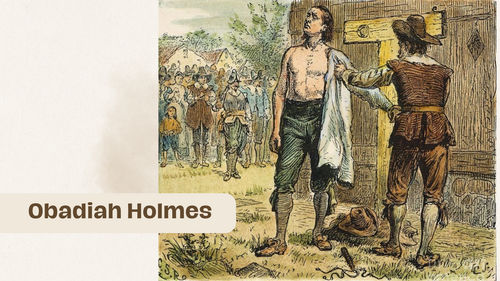
Obadiah Holmes upheld the reliability of God’s Word through courageous suffering. In 1651, he was publicly whipped in Boston for preaching the gospel and gathering believers to worship outside of the state‑mandated Puritan church. His back was horribly injured but his faith was unshaken. He later testified that during the beating, the Lord’s presence was so real to him that he was able to bear the pain. His refusal to deny Scripture or submit to a state church became one of the earliest examples in America of a believer suffering for the right to obey the Bible. It is well-documents that his story spread widely and influenced Founding Fathers like James Madison (Anglican) and Thomas Jefferson (theistic rationalist).
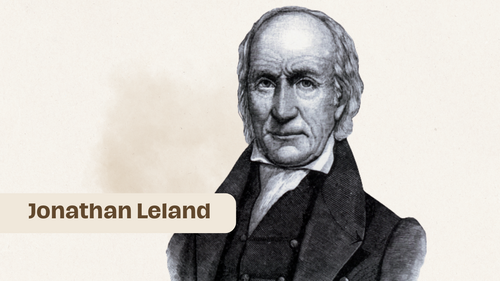
John Leland, another Baptist pastor, influenced the Founders through his own tireless efforts to uphold biblical authority. Leland tirelessly preached, wrote, and lobbied political leaders, especially James Madison, arguing that true faith must be free, never forced. He insisted that government must protect the liberty of conscience because God alone is Lord of the conscience and people must be free to respond to God’s Word for themselves by faith. Leland held a famous meeting with Madison in 1788 to secure Madison’s promise to include language within the Bill of Rights establishing religious freedom in all the States. Madison fulfilled that promise by drafting what became the First Amendment, ensuring that “Congress shall make no law respecting an establishment of religion, or prohibiting the free exercise thereof.”
Together, Holmes’s suffering and Leland’s persuasion formed a powerful testimony: biblical faith requires biblical freedom. As the apostle Peter famously said, “We ought to obey God rather than men” (Acts 5:29). Their influence convinced our Founding Fathers that religious liberty was a moral necessity grounded in Scripture itself.
As we celebrate our nation’s 250th anniversary, we must also recognize the sobering pattern that history teaches. Many renowned empires like Assyria, Babylon, Persia, Greece, Rome, the Arab Caliphate, the Ottoman Empire, and even the height of Britain’s global influence rose to great prominence and then declined or disappeared after about 250 years. Their fall did not occur from a lack of military strength or political strategy by from drifting away from the moral and spiritual foundations that once held them together – by disregarding and adding to the wisdom of God’s Word.
Today, at our own 250‑year mark, we must be honest: we are at great risk of treating God’s Word as insufficient, supplementing our lives with “empty, secular philosophy” and “man‑made traditions,” allowing worldly wisdom to shape our thinking more than Scripture itself. If the United States, especially the believers within our nation, does not return to lives clearly governed by the wisdom of God’s Word, then we will follow the same path of decline as these other nations. Our early Baptist forefathers understood this danger well, and they were willing to obey God’s Word at any cost, trusting that everything we need and everything we read in Scripture is reliable.
But the greatest concern is not just the future of our nation but rather the condition of our own hearts before God. We need more serious Christian believers who trust in the reliability and sufficiency of God’s Word, who study it, internalize it, and let it influence and shape their choices, values, and lifestyle. We need more serious genuine followers of Christ who follow what God’s Word says no matter what, men like the early Baptist American Obadiah Holmes who suffered for the Word of God and like John Leland, who spoke courageously, openly, and persuasively in defense of God’s Word.
So, as we reflect on Agur’s words, we can thank God that He used faithful believers in our nation’s early history to secure the freedom for us to live by that pure and sufficient Word. Their legacy encourages us to do the same: to trust God’s Word fully, obey it boldly, and defend its truth courageously in our own generation. If we do this, God will be our shield as we put our trust in him.
Together, Holmes’s suffering and Leland’s persuasion formed a powerful testimony: biblical faith requires biblical freedom. As the apostle Peter famously said, “We ought to obey God rather than men” (Acts 5:29). Their influence convinced our Founding Fathers that religious liberty was a moral necessity grounded in Scripture itself.
As we celebrate our nation’s 250th anniversary, we must also recognize the sobering pattern that history teaches. Many renowned empires like Assyria, Babylon, Persia, Greece, Rome, the Arab Caliphate, the Ottoman Empire, and even the height of Britain’s global influence rose to great prominence and then declined or disappeared after about 250 years. Their fall did not occur from a lack of military strength or political strategy by from drifting away from the moral and spiritual foundations that once held them together – by disregarding and adding to the wisdom of God’s Word.
Today, at our own 250‑year mark, we must be honest: we are at great risk of treating God’s Word as insufficient, supplementing our lives with “empty, secular philosophy” and “man‑made traditions,” allowing worldly wisdom to shape our thinking more than Scripture itself. If the United States, especially the believers within our nation, does not return to lives clearly governed by the wisdom of God’s Word, then we will follow the same path of decline as these other nations. Our early Baptist forefathers understood this danger well, and they were willing to obey God’s Word at any cost, trusting that everything we need and everything we read in Scripture is reliable.
But the greatest concern is not just the future of our nation but rather the condition of our own hearts before God. We need more serious Christian believers who trust in the reliability and sufficiency of God’s Word, who study it, internalize it, and let it influence and shape their choices, values, and lifestyle. We need more serious genuine followers of Christ who follow what God’s Word says no matter what, men like the early Baptist American Obadiah Holmes who suffered for the Word of God and like John Leland, who spoke courageously, openly, and persuasively in defense of God’s Word.
So, as we reflect on Agur’s words, we can thank God that He used faithful believers in our nation’s early history to secure the freedom for us to live by that pure and sufficient Word. Their legacy encourages us to do the same: to trust God’s Word fully, obey it boldly, and defend its truth courageously in our own generation. If we do this, God will be our shield as we put our trust in him.
Posted in Sermon Manuscript
Posted in Freedom, Wisdom, Wisdom in Plain Sight, Proverbs, America, United States
Posted in Freedom, Wisdom, Wisdom in Plain Sight, Proverbs, America, United States
Recent
Archive
2026
February
March
April
May
2025
January
February
March
June
August
No Comments