
The Value of Varied Voices

Acts 11:19-26; 13:1-3
Over the past six weeks, we’ve seen how Jesus, the Good Shepherd, cares for his sheep. In John 21, we saw that his people need ongoing care, and Exo 18, showed that shared leadership is a model for providing this care. We then saw this model in the NT, with churches led by multiple men who called pastor (shepherd), elder (example), and overseer, all three words that describe their role in the church, which they should carry out with humility.
Last week, from 1 Tim 5, we learned that pastoral teams care for the church by leading and teaching it well together, and the church cares for its pastors by honoring and holding them accountable. This brings us to today, in which we’ll see not only a pattern and model for multiple pastors leading a church together, but the value and benefits for doing so.
The main thought for the message today is that a church led by multiple and varied pastors can multiply Christians and churches in an effective and sustainable way. We will learn this from the example given to us by the church in Antioch of Syria. Let’s start with the first part of the main thought, “a church benefits from multiple pastors.”
A church benefits from a multiplicity of pastors.
If you’ve been paying attention to this preaching series, you know that Scripture teaches this model of shared, team leadership clearly and consistently. Today, we will simply acknowledge that the church in Antioch of Syria followed this approach.
In Acts 11:19-26, we read about how this church began:
Now those who were scattered after the persecution that arose over Stephen traveled as far as Phoenicia, Cyprus, and Antioch, preaching the word to no one but the Jews only. But some of them were men from Cyprus and Cyrene, who, when they had come to Antioch, spoke to the Hellenists, preaching the Lord Jesus. And the hand of the Lord was with them, and a great number believed and turned to the Lord. Then news of these things came to the ears of the church in Jerusalem, and they sent out Barnabas to go as far as Antioch. When he came and had seen the grace of God, he was glad, and encouraged them all that with purpose of heart they should continue with the Lord. For he was a good man, full of the Holy Spirit and of faith. And a great many people were added to the Lord. Then Barnabas departed for Tarsus to seek Saul. And when he had found him, he brought him to Antioch. So it was that for a whole year they assembled with the church and taught a great many people. And the disciples were first called Christians in Antioch.
From this we see that the church was started by the efforts of multiple men from places called Cyprus and Cyrene. After the church was established, a man named Barnabas joined the pastoral team, then he eventually added Saul (or Paul) to the team, as well.
In Acts 13:1, we see that the team consisted of five men: Barnabas, Simeon, Lucius, Manaen, and Saul (Paul). Last week we learned that pastors care for the church in two primary ways, through preaching and teaching Scripture, and they do this through sermons, large group instruction, small group instruction, and one-on-one counseling and instruction. The five leaders of the church in Antioch were doing both. “Prophets and teachers” is equivalent to “laboring in the word and doctrine” (1 Tim 5:17).
From this we see that having multiple pastors (five in this case) expands the capacity and capability of a church to give its members the spiritual care and teaching they need to grow in faith and reach more followers of Christ. A church led by multiple pastors can multiply Christians and churches in an effective and sustainable way. But multiplicity doesn’t matter only because more is better, it’s better because a multiplicity of men provides a diversity of men. Antioch’s pastors weren’t just multiple, they were varied.
A church benefits from a diversity of pastors.
When I say “diversity,” I don’t mean what popular culture calls DEI (diversity, equity, and inclusion). As a church, we worship God. So, diversity on a pastoral team must follow God’s Word, not popular concepts and cultural trends promoted by professors, politicians, sociologists, social influencers, and the mainstream media.
This means that a pastoral team should only include of men and not women, and these men should believe and practice the gospel of Christ and the clear doctrine and teaching of Scripture, not other religions. This also means a pastoral team should not include anyone who accepts or practices an ungodly lifestyle, including any immoral, ungodly behaviors and lifestyles which our culture classifies as “sexual orientation” today.
That said, we must also see the benefits and value of assembling a pastoral team that features appropriate, biblical, godly diversity. By this I mean a team of godly men who come from a variety of backgrounds, bring a variety of perspectives, and represent a variety of people who may be present in their congregation and community. The five pastors of the church at Antioch were diverse in a godly and beneficial way.
Barnabas came from a prosperous Greek-speaking island called Cyprus known for copper, seafaring, and worshiping Aphrodite, the Greek goddess of love, beauty, desire. According to Acts 4:36, he was a Jewish descendant of the priestly tribe of Levi. He had also owned a plot of land, which he sold to give its proceeds to the church. This man had the reputation of being an encouraging person who saw the best in people.
Simeon was also called Niger, which means “black.” This was not a negative name in any way, but most likely described his skin tone, identifying him as being most likely from somewhere in Northern Africa. This was the “breadbasket” of the Roman Empire, much like the Midwest is to America today.
Lucius was from Cyrene, a wealthy Greek city in Libya famous for breeding world-class racehorses and selling the rare but highly sought-after silphium plant, which was used both a luxurious spice and for various medical treatments.
Manaen was raised alongside Herod Antipas in a Romanized palace culture of education, lavish banquets, and political power, removed from the rural fishing and farming villages of Galilee around him. For whatever reason, he took the opposite path of his childhood friend. Herod married his brother’s wife, imprisoned and executed John the Baptist, then allowed the crucifixion of Jesus. Meanwhile, Manaen believed on Jesus and became a pastor of a church north of Galilee.
Saul was from Tarsus, the primary city in Cilicia northwest of Antioch. It was a proud university city known for promoting Stoic philosophy and for manufacturing and selling goat-hair tent cloth. Saul was a Roman citizen by birth and a Pharisee trained under Gamaliel, a highly acclaimed rabbi (Acts 22:3). Before believing on Christ, he had been a lead persecutor of Christians and had presided over the public execution of Stephen, first Christian martyr.
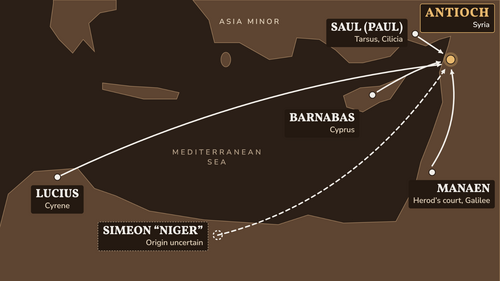
These men formed a diverse and fascinating team. They came from a variety of cultural and ethnic backgrounds, a variety of educational and religious backgrounds, a variety of economic and social backgrounds, and a variety of geographical backgrounds. But they shared together the responsibility of leading and teaching the church at Antioch.
Such biblical, godly diversity increases good and wholesome representation and perspective. It ensures that as pastors make decisions and provide care and guidance a church, that church will benefit from the safety and wisdom that a multitude of counselors provide. It also ensures that a broader variety of people in the church and community will not only be represented by the pastors but will be better understood, as well.
For this reason, it is important to assemble a team of pastors, whenever possible, that is not only qualified from a biblical, godly standpoint, but which features a wholesome variety among the men on the team. Men from different stages of life, and from different cultural, religious, and ethnic backgrounds which represent – if possible – the kinds of people in the church and in the community the church serves.
As we learned last week, not all these men must be paid or paid full-time financially, which makes this kind of approach more feasible. But assembling a team of men like this over the next few years would be a significant step for us to pray about and take as God allows.
From the church at Antioch, we see that a church led by multiple and varied pastors can multiply Christians and churches in an effective and sustainable way. And here’s what the multiple, varied voices made possible: a church that multiplied Christians and churches.
A church with multiple pastors can multiply Christians and churches.
When we read about what happened in the church at Antioch, we notice two significant outcomes and effects this church had. First, it was a growing church that reached new followers of Christ and taught them so well that they were called “Christians.”
We see this in Acts 11:19-26. First, “a great number believed and turned to the Lord” (Acts 11:21), and then again after Barnabas joined them, “a great many people were added to the Lord” (Acts 11:24). Then after Saul joined them, it says, “the disciples were first called Christians in Antioch” (Acts 11:26).
This title “Christian” is fascinating. First, it started at Antioch because of this church. Second, it seems to have been given by outsiders or unbelievers in the surrounding community, not by the church itself, for it says “were first called,” meaning people called them this, they did not ask to be called this or call themselves this.
This word does not mean “little Christs,” as some people claim. It means “Christ followers,” or more literally, “people of Christ’s party.” The teaching in the church at Antioch was so effective that its members were living in such a distinct and noticeable way that people identified them directly with the lifestyle and teaching of Jesus. This was likely not done as a compliment but as a way to make fun of and marginalize them.
Peter acknowledges this later on when he says:
If anyone suffers as a Christian, let him not be ashamed, but let him glorify God in this matter. (1 Pet 4:16)
What the world meant as a badge of shame Christ’s followers meant as a badge of honor. The pastors who led and taught the church at Antioch had served the church so well that its members were living so like Christ that the unbelieving world around them said so. Is your lifestyle making such an impact today?
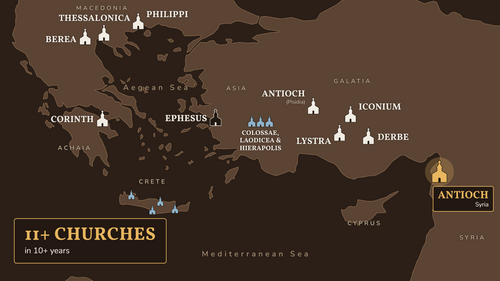
But this church was not only multiplying Christians, but it was also multiplying churches. According to Acts 13:2-3, the church sent out two of their five pastors to not only reach more people but start more churches in places beyond Antioch of Syria.
Over a span of approximately ten+ years, the church at Antioch would continue to send and support this kind of ministry abroad through the ministry of two men who had first been pastors in their church, including Barnabas and Saul. This ministry would produce at least 8 churches directly, with at least 3 other churches started through Paul’s ministry in the church at Ephesus, a church he didn’t start but which he served for about 3 years. He also had some degree of influence on some new churches on the island of Crete.
From this, we see some things that pertain to today’s message. First, Paul returned to Antioch at least four times, to report on his work and to serve there some more, as well.
This teaches us something which we may easily overlook, that even though the church sent away 2 of its 5 pastors, it continued to thrive without them. We know this because Paul continued to return and the church continued to exist and support him. This is significant because sending away two pastors in most churches today would be quite difficult to manage.
We ourselves know what it’s like to replace a pastor when we have only one or two. But a team of multiple men makes managing such transitions much easier and sustainable over time. Notice what Luke says about the time they returned to Antioch a second time:
Paul and Barnabas also remained in Antioch, teaching and preaching the word of the Lord, with many others also. (Acts 15:35)
Not only did they stay in Antioch for a while to teach and preach there some more, they did so “with many others, also.” What does this “with many others, also” mean? It means that in the handful of years they had been away, the church added multiple other pastors to their team. So, the church not only continued to grow, but it continued to grow its pastoral team, as well.
We should also notice something else about these 10+ years of sending its pastoral leaders away to start more churches elsewhere. When they sent them, they sent them in teams of men, and as churches were started, they patterned them after their sending church by establishing teams of pastors in the new churches, too.
So when they had appointed elders in every church, and prayed with fasting, they commended them to the Lord in whom they had believed. (Acts 14:23)
For this reason I left you in Crete, that you should set in order the things that are lacking, and appoint elders in every city as I commanded you (Tit 1:5)
The pattern of multiple and diverse leaders we see throughout the NT was practiced by the church at Antioch of Syria, which assembled a team of at least five men in its earliest years. Then it sent some of those men out and replaced them with others, remaining growing and healthy for years to come. Meanwhile, the men they sent away from their pastoral team planted churches using a team model, then established those churches with teams of multiple pastors as well, just like their sending church had done.
As the church at Antioch shows us today, a church led by multiple and varied pastors can multiply Christians and churches in an effective and sustainable way.
So, I want to leave you with something to consider. Imagine that God allows us to assemble a team of multiple, diverse men over the next few years. Imagine that we all commit ourselves to becoming so faithful and Christlike in our lifestyle that more people are coming to Christ and into the church and that we then send out some of our own pastors to start other churches following a similar model. Imagine the kind of difference we could make not only on our community but in our larger region for Christ. And some of those future pastors, both in the near future and in the years and generation ahead, may be sitting in our auditorium right here today.
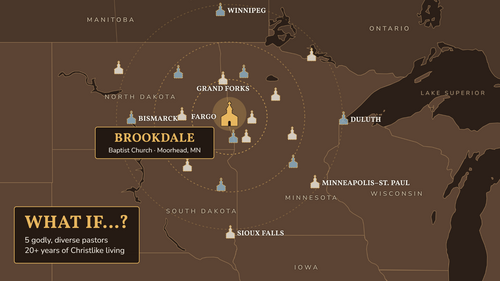
May we pray to this end and be the kind of church who believes in and supports this kind of vision by living Christlike, fruitful lives. How steps can you take to help bring this model and vision to a reality?
Posted in Sermon Manuscript
Posted in Pastoral Care, Pastors, Missions, Disciples, Discipleship, Ecclesiology, Church, Ministry, Feeding the Flock of God
Posted in Pastoral Care, Pastors, Missions, Disciples, Discipleship, Ecclesiology, Church, Ministry, Feeding the Flock of God
Recent
Archive
2026
February
March
April
May
July
2025
January
February
March
June
August
No Comments